


The Complete Guide to Investing in Rare European Antiques
Quick Summary
Buying rare european antique furniture well depends on authentication, documented provenance and condition rather than age alone. Examine construction, hardware and wear, request every ownership record, and get an independent appraisal before committing to a high-value purchase.
- Check construction clues such as hand-cut dovetails, wooden pegs and irregular saw marks.
- Compare hardware and wear across drawers, backs and interior panels to spot later assembly.
- Ask the seller for all documents and keep copies, including photos taken at purchase.
- Get an independent appraisal on any high-value purchase to confirm attribution.
- Plan your resale channel and keep relevant documents before you buy.
Table of Contents
- Why Rare European Antique Furniture Holds Its Value
- A Brief History of European Antique Furniture Styles
- What Drives Rarity and Value in Antique Pieces
- How to Authenticate Antique Furniture Before You Buy
- Investment Strategies for Collectors and Homeowners
- Risks, Costs and Appraisal Considerations
- Planning Your Resale Exit Strategy
- Start Your Collection with Old Europe Antique Home Furnishings
- Frequently Asked Questions
Rare European antique furniture has long been treated as a store of value, but buying it well takes more than a good eye. This guide walks through how collectors and homeowners can approach the market with discipline, from authentication and provenance to resale planning.
This guide addresses questions buyers may consider before they commit. Antique furniture is a tangible asset, but its value depends on construction, documentation and condition, and those factors vary far more than most first-time buyers expect. The sections below cover rarity, authentication, and resale planning. Where the research supplied no verified figure, we describe the principle and point you to the source to check current amounts.
Why Rare European Antique Furniture Holds Its Value
Age is one factor to consider when assessing a piece.
A Brief History of European Antique Furniture Styles
European furniture styles follow the patronage, materials and craft traditions of their periods. Renaissance Revival pieces of the 1800s borrowed carved detail and monumental proportions from earlier Italian and Spanish models, while Georgian English furniture favored restrained oak and mahogany construction.
Knowing which style a piece belongs to helps you judge whether its proportions, hardware and carving are plausible for its claimed date. Mismatches between style and construction are one of the earliest warning signs a buyer can catch.
What Drives Rarity and Value in Antique Pieces
Rarity can be considered in relation to how many examples survive, a piece's completeness, and its recorded history.
Condition is another factor to consider when assessing a piece.
How to Authenticate Antique Furniture Before You Buy
Authentication starts with examining the piece itself, not its listing. Look at how it is constructed, what the hardware is made of, and whether the wear makes sense for its age and use. Ask the seller for every document they hold, and be cautious of any seller who cannot explain a piece's history. You can compare authentic European antique furniture dealers before you buy.
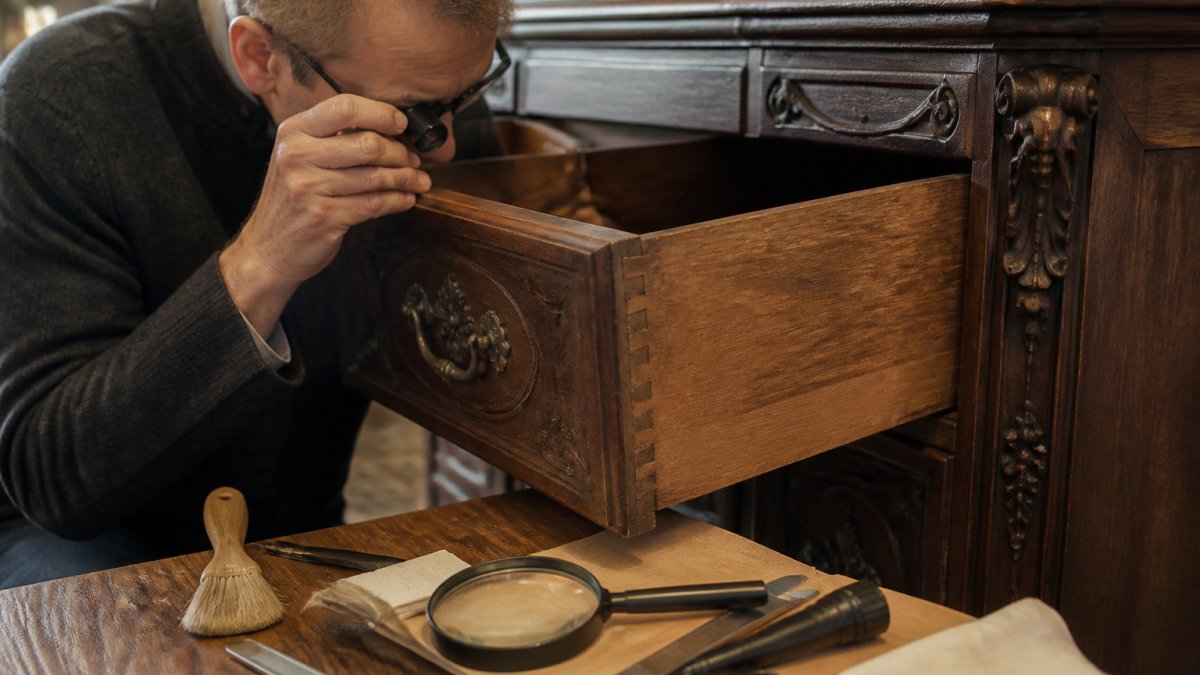
If you are unsure, an independent appraisal is worth the cost on any high-value purchase. Standard appraisal terminology and credentials are a useful place to start your search.
Reading Construction and Hardware Clues
Hand-cut dovetails, irregular saw marks and wooden pegs point to earlier production methods, while uniform machine marks and modern screws suggest later work or alteration. Check whether drawer runners, backs and interior panels show the same wear as the visible surfaces, since mismatched wear often reveals a later assembly.
Hardware deserves close inspection. Original pulls and escutcheons usually show patina consistent with the rest of the piece. Brand-new hardware on an old carcass is common and can be a repair, but it should be disclosed and priced accordingly.
Why Provenance Matters and How to Document It
Provenance is the recorded ownership history of a piece (Ownership/Collecting History). Strong provenance includes prior sales receipts, auction catalogs, exhibition records, family correspondence or appraisal reports that name the object. Keep copies of everything, including photographs taken at the time of purchase.
Sideboard, Italian Renaissance Revival, Monumental, Carved Walnut, 127H →
Investment Strategies for Collectors and Homeowners
Collectors and homeowners pursue different goals. Collectors often focus on completing a set or acquiring a specific period, while homeowners may buy one statement piece that they expect to keep for decades. Readers weighing this as an asset can browse certified antique furniture for investment portfolios. Both should set a budget, a time horizon and a clear reason for each purchase.
Risks, Costs and Appraisal Considerations
Potential considerations include attribution, repairs, and the resale market for niche styles.
Costs may extend beyond the purchase price. For current price and value benchmarks, see the antique European cabinet prices and value guide. Consider possible delivery, insurance, appraisal, and conservation costs. Before restoring a piece, consider how repairs may affect it. Read how to restore antique furniture without losing value.
The article points to several cost and risk factors buyers should weigh before committing.
| Factor | What to consider | Note |
|---|---|---|
| Purchase price | Initial outlay | Set a budget first |
| Delivery | Moving the piece | Plan for shipping costs |
| Insurance | Protecting value | Cover high-value pieces |
| Appraisal | Confirming attribution | Worth it on high-value buys |
| Conservation | Repairs and care | Disclose and price repairs |
| Attribution | Whether the piece is what it claims | Verify before buying |
| Niche resale market | Liquidity of the style | May limit sale options |
Planning Your Resale Exit Strategy
You can consider your resale plans when you buy. Keep relevant documents and note any repairs or alterations.
Consider how you will sell before you need to. Auction houses, specialist dealers and private collectors each reach different buyers and charge different fees. Choose the channel that matches the piece's rarity and your timeline.
Start Your Collection with Old Europe Antique Home Furnishings
If you are ready to begin, the current inventory is a good place to look. Our Italian Renaissance Revival carved walnut sideboard, listed at $2,379.15, is a 19th-century statement piece with documented construction and original carving. For a larger investment, the Italian Renaissance Revival carved sideboard is listed at $5,845.00. You can also browse the full range of new inventory for Old Europe antique home furnishings to see what is currently available.
Before you buy, review the available listing details.
Frequently Asked Questions
Is antique furniture a good investment?
Antique furniture may appeal to buyers for its historical character and craftsmanship. Consider your reasons for buying before you make a purchase.
How can you tell if antique furniture is authentic?
The verified business information does not describe an authentication process. For questions about a particular piece, review its available listing information.
Why is provenance important when buying antique furniture?
Provenance is the documented ownership history of a piece.
What factors affect the value of antique furniture?
Factors buyers may consider include a piece's period, condition, provenance, and craftsmanship.
What risks should you consider before investing in antiques?
Before buying, consider the piece's condition and the possibility that resale may take time.
