


Certified Antique Furniture for Investment Portfolios
Table of Contents
- Why Certified Antique Furniture Belongs in Investment Portfolios
- Authentication and Certification: What Actually Matters
- How to Value Antique Furniture for Investment Returns
- Finding Authentic European Antique Furniture Dealers
- Investment-Grade Furniture Categories and Expected Appreciation
- Antique Furniture Appraisal Services and Portfolio Documentation
- Managing Risk: Liquidity, Storage, and Market Volatility
- Building Your First Certified Antique Furniture Investment
- Frequently Asked Questions
Last Updated: October 11, 2026
Why Certified Antique Furniture Belongs in Investment Portfolios
Certified antique furniture for investment portfolios represents a distinct asset class operating on fundamentally different principles than stocks, bonds, or real estate. The most sophisticated portfolios treat authenticated period pieces not as decoration, but as tangible wealth preservation vehicles.
Unlike digital assets or paper investments, antique furniture occupies physical space, serves functional purpose, and carries provenance that compounds over decades. A Georgian oak chest-on-chest from the 1700s appreciates based on scarcity, craftsmanship, historical significance, and collector demand, factors independent of broader economic cycles.
Investment-grade pieces require certification and documentation. Without verifiable authentication, provenance, and professional appraisal, even beautiful furniture remains speculative. Buyers who understand authentication methods, market categories, and exit strategies outperform those purchasing based on aesthetics alone.
Below, we'll walk through exactly how to evaluate, source, and manage certified antique furniture as a portfolio component, including the documentation standards that separate serious investments from risky acquisitions.
Authentication and Certification: What Actually Matters
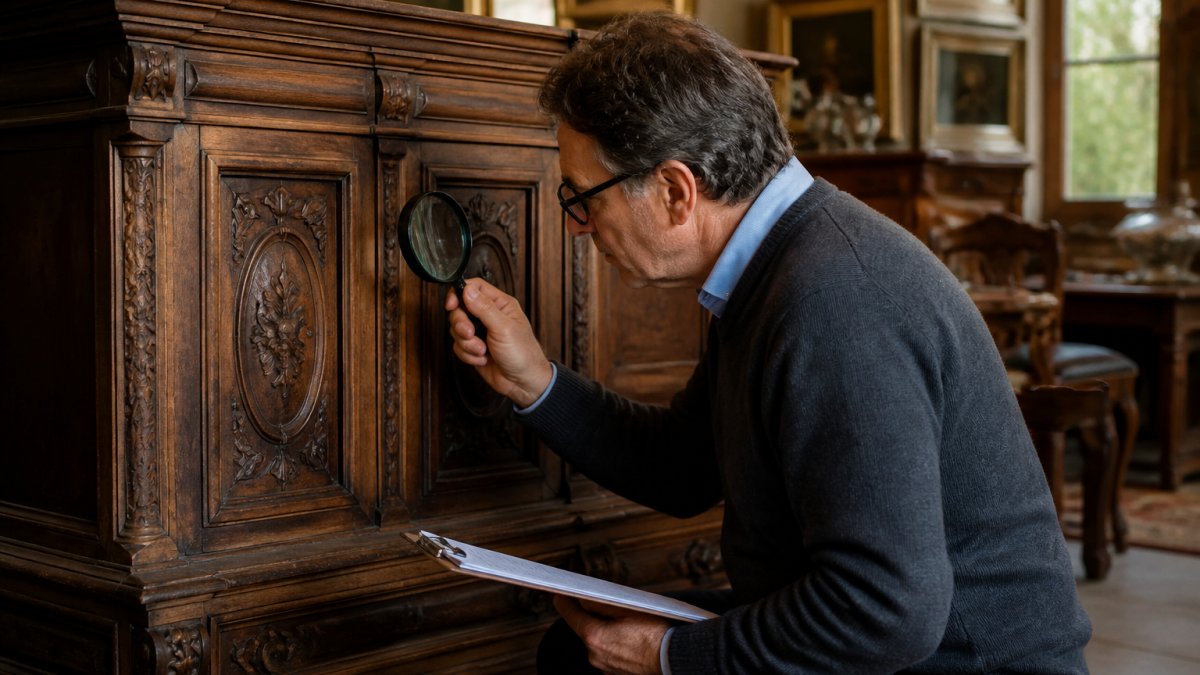
Certification is a layered process involving material analysis, stylistic verification, construction technique assessment, and documented provenance.
A qualified professional examines the piece against period-specific standards: wood species availability, joinery methods, hardware evolution, finish characteristics, and repair history. The appraiser produces a written report that becomes the legal foundation for insurance, estate planning, and resale.
Who can certify varies by furniture type and period. The American Society of Appraisers (ASA) maintains standards for personal property appraisers. Many specialize further: some focus on European Renaissance Revival pieces, others on Georgian or Victorian furniture. American Society of Appraisers professional standards outlines credential requirements. Regional antique dealer associations also maintain certification lists.

Professional appraisal costs vary per piece. For investment-grade pieces valued above $5,000, this protects against overpayment, provides insurance documentation, and establishes baseline value for tracking appreciation.
Provenance traces ownership history; certification verifies authenticity. Both matter for investment value. A piece with excellent provenance but questionable authenticity commands far less than an authenticated piece with partial provenance.
How to Value Antique Furniture for Investment Returns
Professional appraisers use comparable sales analysis, cost approach, and income approach. For furniture, comparable sales dominates.
Comparable sales analysis tracks recent sales of similar pieces. No two pieces are identical, they differ by wood species, condition, marquetry quality, provenance, and size. Appraisers adjust for these variables to estimate fair market value.
Condition dramatically impacts valuation. A piece with original finish, minimal restoration, and intact hardware commands 30-50% premiums. A "good bones" piece requiring restoration rarely recovers those costs in resale. Investment-grade acquisitions prioritize condition and originality.
Market demand shifts over decades. Victorian furniture saw declining interest from 2000-2015; Renaissance Revival and neoclassical pieces maintained steadier demand. Understanding these cycles helps identify undervalued categories before demand resurges.
A piece with exhibition history, scholarly publication, or museum acquisition records commands significant premiums. Undocumented pieces carry valuation risk because future buyers lack reference points beyond the appraisal.
Valuation Factor |
High Impact |
Moderate Impact |
Why It Matters |
|---|---|---|---|
Condition (original vs. restored) |
Yes |
, |
Directly affects resale value and insurance coverage |
Provenance documentation |
Yes |
, |
Supports authenticity claims and market confidence |
Rarity within period/style |
Yes |
, |
Scarcity drives long-term appreciation |
Size and functionality |
, |
Yes |
Affects buyer pool and placement options |
Wood species and materials |
Yes |
, |
Determines durability and period accuracy |
Repair history |
Yes |
, |
Restoration costs rarely recoup in resale |
Finding Authentic European Antique Furniture Dealers
Sourcing certified antique furniture for investment portfolios requires vetting dealers against specific criteria.
Legitimate dealers maintain clear acquisition records, provide written condition assessments, and explain pricing by referencing comparable sales, condition, rarity, and provenance.
Reputation verification involves checking membership in professional organizations. The Antiquities Dealers' Association standards for member dealers sets ethical guidelines. Many reputable dealers belong to regional associations that enforce disclosure standards and dispute resolution processes.
Old Europe Antique Home Furnishings maintains curated inventory spanning the 16th century to early 1900s, with documented provenance for significant pieces. Every acquisition undergoes condition assessment and authentication review. We provide detailed condition reports, facilitate professional appraisals, and maintain transparent pricing based on comparable market data.
Physical inspection is non-negotiable for investment purchases. Photographs cannot reveal wood grain variation, finish authenticity, hardware wear, or structural integrity. Dealers pressuring remote purchases without inspection access warrant skepticism.
Investment-Grade Furniture Categories and Expected Appreciation
Not all antique furniture appreciates equally. Certain periods, styles, and functional categories demonstrate stronger investment characteristics than others.
Georgian and Regency furniture (1714-1830) commands consistent demand and appreciation. Craftsmanship standards were exceptionally high; oak and mahogany construction resists deterioration.

Renaissance Revival pieces (1850-1900) have recovered from decades of undervaluation. Heavy carving, figural details, and elaborate marquetry appeal to collectors seeking statement pieces.
French Provincial furniture (1700s-1800s) maintains steady collector demand. Refined proportions and accessible pricing attract both decorators and investors.
Biedermeier and neoclassical pieces (1815-1850) appeal to minimalist aesthetics gaining contemporary favor, positioning them well for sustained appreciation.
Functional category matters significantly. Dining tables and chairs appreciate faster than case pieces. Secretaries appeal to professionals; display cabinets attract collectors. Storage pieces maintain steadier demand than purely decorative items.
Upholstered pieces carry higher risk. A 19th-century sofa requiring reupholstering may lose 40-50% of its value through restoration.
Antique Chest-on-Chest, English Georgian Period, Oak, Cornice, 8 Drawers, 1700s! →
Antique Furniture Appraisal Services and Portfolio Documentation
Professional appraisal serves multiple functions beyond valuation. It creates the documentation framework necessary for insurance, estate planning, and tax purposes.
For insurance, appraisals establish replacement value, what you'd pay to acquire an identical piece today. This differs from fair market value (what a willing buyer would pay a willing seller) and assessed value (tax authority determinations). Your insurance agent can clarify which standard your policy requires.
Estate planning requires documented valuations for probate purposes and beneficiary distribution. Without professional appraisals, heirs face uncertainty and potential disputes. The cost of appraisal is minimal compared to estate complications it prevents.
Tax documentation matters if you're tracking portfolio appreciation or claiming depreciation on business-held pieces. The IRS requires qualified appraisals for charitable donations exceeding $5,000. IRS guidelines for qualified appraisers of personal property specify credential requirements.
Appraisal updates should occur every 3-5 years for actively managed investment portfolios. Market conditions shift, comparable sales change, and condition may evolve. Regular updates maintain accurate portfolio valuation and insurance coverage adequacy.
Appraisal Purpose |
Frequency |
Documentation Needed |
Cost Range |
|---|---|---|---|
Insurance coverage |
Every 3-5 years |
Replacement value estimate |
$300-$800 |
Estate planning |
Once, then update before distribution |
Fair market value determination |
$250-$700 |
Tax documentation |
As needed for donations/claims |
Qualified appraiser credentials |
$400-$1,000 |
Portfolio tracking |
Annually for active investors |
Comparative market analysis |
$200-$600 |
Managing Risk: Liquidity, Storage, and Market Volatility
Antique furniture carries unique risks distinct from conventional investments. Understanding these risks determines whether pieces fit your portfolio strategy.
Liquidity risk is the primary concern. Selling a specific piece of antique furniture requires finding a qualified buyer willing to pay fair market value. This differs from stocks, which you can liquidate in seconds. Selling furniture typically takes 3-12 months through dealers, auctions, or private sales. If you need rapid capital access, antique furniture is illiquid.
Auction houses provide liquidity but at a cost. Dealer consignment involves negotiation over pricing and timeline. Private sales require marketing effort and buyer vetting. All methods involve delays measured in months, not days.
Storage and maintenance costs compound over time. Storage and maintenance costs compound over time. Periodic conservation work, wood conditioning, hardware maintenance, minor repairs, adds to these costs annually per piece. These carrying costs reduce net appreciation.
Market volatility follows aesthetic cycles. Market volatility follows aesthetic cycles. Conversely, Georgian and Regency pieces showed steadier appreciation. Concentration in a single style or period amplifies volatility risk.
Condition deterioration represents ongoing risk. Wood can crack if humidity fluctuates. Finishes can deteriorate. Hardware corrodes. Upholstery decays. Each deterioration reduces value. Proper storage and maintenance mitigate this risk but cannot eliminate it entirely.
Diversification within antique furniture, mixing periods, styles, and functional categories, reduces concentration risk. A portfolio combining Georgian case pieces, Renaissance Revival sideboards, and French Provincial tables spreads risk across multiple aesthetic and market cycles.

Building Your First Certified Antique Furniture Investment
Starting a certified antique furniture investment portfolio requires a structured approach. Impulse purchases based on aesthetics alone rarely perform well financially.
Step 1: Define your investment thesis. Decide whether you're seeking appreciation potential, functional use with appreciation upside, or pure wealth preservation. This determines which categories and periods align with your goals.
Step 2: Establish a budget and allocation. Determine what percentage of your overall portfolio you're comfortable allocating to antique furniture. Conservative investors might allocate 5-10%. More aggressive collectors might go 15-25%.
Step 3: Research comparable sales. Before acquiring your first piece, spend 2-3 months tracking auction results and dealer inventories. Understand what similar pieces sell for, what condition factors influence pricing, and which categories show strongest appreciation.
Step 4: Source through documented channels. Work with dealers who maintain transparent acquisition records and provide written condition assessments. Old Europe Antique Home Furnishings, for example, offers pieces with documented provenance and condition details.
Step 5: Obtain professional appraisal. Before finalizing any acquisition, commission an independent appraisal. This establishes baseline value, confirms authenticity, and creates documentation for insurance and estate purposes. The appraisal cost is insurance against overpayment.
Step 6: Document and insure. Maintain detailed records: purchase date, price, condition notes, appraisal reports, conservation work, and insurance policies. Photograph pieces from multiple angles. Store documentation in a secure location separate from the physical pieces.
Step 7: Monitor and rebalance. Track your portfolio's performance annually. Rebalance if certain categories become overweighted.
Certified antique furniture for investment portfolios demands patience, research, and disciplined acquisition. It rewards investors who treat pieces as long-term holdings rather than short-term trades.
Old Europe Antique Home Furnishings can support this journey. Our curated selection includes investment-grade pieces across multiple periods and styles, from a Georgian oak chest-on-chest priced at $2,275 to museum-quality Renaissance Revival sideboards and French Provincial cabinets.
Frequently Asked Questions
What makes antique furniture a viable investment compared to other alternative assets?
Certified antique furniture offers tangible asset value with potential long-term appreciation, especially pieces with documented provenance and rarity. Unlike stocks or bonds, you own a physical object with aesthetic and functional value. Furniture from recognized periods (Georgian, Victorian, Renaissance Revival) has demonstrated consistent collector demand. However, returns depend heavily on condition, authenticity, and market trends. Diversification across furniture categories and periods reduces risk more effectively than concentrating in a single style.
How do I verify the authenticity of antique furniture for investment purposes?
Authentication requires examining construction methods, wood types, hardware, and finish consistency against known period standards. Professional appraisers use wood analysis, joinery inspection, and historical documentation to establish age. Certification from recognized appraisers adds credibility for portfolio documentation and insurance. Look for provenance records, exhibition history, and previous ownership documentation. Avoid pieces with major repairs or replaced structural components unless documented. Reputable dealers like Old Europe Antique Home Furnishings provide detailed condition reports and can source pieces with verified historical records.
What are the typical costs of professional antique furniture appraisal services?
Professional appraisal fees vary depending on complexity, size, and historical significance. Detailed written appraisals for insurance or portfolio documentation cost more than verbal assessments. For investment portfolios, appraisals are essential for insurance claims, estate planning, and documenting fair market value. Some dealers offer preliminary evaluations; certified appraisers provide legally defensible documentation.
Which furniture periods and styles offer the best investment potential?
Georgian and Victorian pieces consistently appreciate due to established collector demand and documented rarity. Italian Renaissance Revival furniture from the 1800s commands premium prices for carved walnut examples with exceptional provenance. French Provincial and Louis XIII styles attract serious collectors willing to pay for authentic craftsmanship and historical significance. Early 20th-century Biedermeier marquetry tables appeal to design-conscious investors. Investment potential depends on condition, size, and market trends. Monumental pieces (sideboards over 100 inches, large dining tables) and heavily carved examples with documented provenance appreciate faster than simpler, smaller pieces.
How should I allocate antique furniture within a diversified investment portfolio?
Antique furniture typically represents 5–15% of alternative asset allocations due to liquidity constraints and market volatility. Spread investments across multiple periods, styles, and categories (seating, storage, tables) to reduce risk. Balance high-value statement pieces (monumental sideboards, Renaissance Revival cabinets) with smaller, more liquid items (center tables, vitrines). Maintain detailed appraisals, condition documentation, and insurance coverage for each piece. Consider your ability to store, maintain, and eventually sell pieces—storage costs and conservation needs reduce net returns. Consult a financial advisor to align antique furniture investments with your overall wealth strategy.