


Antique European Cabinet Prices and Value: 2026 Guide
Table of Contents
- What Determines Antique European Cabinet Prices and Value
- How to Identify Antique Furniture: Authentication Essentials
- Antique French Cabinet Value: A Period-Specific Look
- Antique Cabinet Appraisal: Understanding Valuation Types
- Antique Cabinet Price Guide: Asking Prices by Type and Origin
- What to Check Before Buying an Antique European Cabinet
- Frequently Asked Questions
Last Updated: October 4, 2026
What Determines Antique European Cabinet Prices and Value
Antique European cabinet prices depend on subtle but critical distinctions. Two seemingly identical pieces can have vastly different values based on origin, period, wood species, condition, and restoration history.
A generic "18th-century cabinet" reveals little. Is it French rococo or Swedish neoclassical? Solid oak or veneered pine? Original condition or restored? These details separate modest investments from significant ones.
Origin and Period
Origin and period are the two most powerful price drivers. A French piece from the 1700s commands different value than a Swedish cabinet from the 1920s, even if equally well-crafted.
French cabinets occupy the premium tier. Documented French pieces with verifiable provenance typically sell for substantially more than comparable English or German cabinets of the same period.
Swedish and Scandinavian pieces appeal to buyers seeking blonde woods and minimalist proportions. They're valued for authenticity and functionality as much as historical significance.
Period matters as much as origin.
Wood Species and Finish
Solid oak, cherry, walnut, and mahogany indicate quality European cabinetry; pine suggests secondary or lower-quality pieces. Whether wood retains original patina or has been refinished directly impacts value.
Original finishes command premiums. A cabinet retaining its aged finish from the 1800s is worth more than an identical piece refinished in the 1970s, since original patina cannot be replicated.
Veneered construction was skilled craftsmanship, not a shortcut, it provided stability and showcased beautiful grain patterns. However, veneered cabinets are vulnerable to damage, and replacement veneers reduce value.
Condition and Restoration Impact
A cabinet in "as-is" condition with original hardware and finish will almost always outvalue a beautifully restored piece, reflecting what serious collectors want: evidence of authenticity and age.
Structural integrity matters. Cabinets with loose joints, missing shelves, or active woodworm damage are restoration candidates; professional restoration costs can exceed market value.
Professional restoration respecting original materials can preserve value. Amateur refinishing, stripping original finish, or replacing hardware with reproductions destroys value and signals carelessness about historical integrity.
How to Identify Antique Furniture: Authentication Essentials
Separating authentic cabinets from reproductions requires understanding construction details, hardware, and wood movement patterns, elements that only in-person inspection reveals.
Reproduction vs. Authentic Signs
Hand-cut dovetails on 18th-century pieces show irregular spacing; machine-cut dovetails from the 1900s onward are uniform. Authentic pieces use hand-forged screws with irregular slots; reproductions use modern Phillips-head or Robertson screws.
Original hardware shows wear patterns consistent with 150+ years of use. Mixed hardware styles signal authenticity, owners replaced broken pieces with what was available across decades.
Authentic cabinets show seasonal wood movement: panels shrink and expand, creating visible gaps. Drawer bottoms often split along the grain, a sign of age. Reproductions simulate this artificially but look forced.
Documentation and Provenance
Documented provenance significantly impacts value. Pieces with auction house catalogs or estate sale documentation command premiums over undocumented pieces.
Auction house records are the gold standard. A documented sale history makes pieces far easier to resell.
Maker's marks add substantial value if verified. A "JME" mark (Jurande des Menuisiers-Ébénistes) indicates Paris guild membership before 1791. Since marks are forged, verification matters.
Antique French Cabinet Value: A Period-Specific Look
French cabinets occupy a premium position in the antique furniture market, and understanding period-specific styles helps buyers recognize what they're looking at and what it should cost.
18th-Century French Styles
Rococo cabinets from the mid-1700s feature elaborate carved details and marquetry. A documented rococo cabinet in original condition can easily command five figures.
Louis XVI style (1774-1792) is more restrained than rococo but features fine craftsmanship with inlaid details. It's typically valued lower than rococo but higher than Victorian pieces.
A rococo cabinet retaining original finish and hardware is substantially rarer and more valuable than a refinished piece. Supply is genuinely limited, so collectors expect premium prices.
Victorian and Art Deco French Pieces
Victorian-era French cabinets (1840s-1890s) show heavier proportions and often incorporate marble tops or glass doors. They're more accessible in price than rococo cabinets.
Art Deco French cabinets (1920s-1930s) represent a completely different aesthetic: simplified forms, geometric details, and often exotic woods like macassar ebony or burled walnut. These pieces appeal to modernist collectors and often price higher than comparable Victorian pieces because demand is strong among contemporary interior designers.
Antique Cabinet Appraisal: Understanding Valuation Types
Here's where most buyers get confused: a cabinet has multiple "values" depending on context. Market value, insurance value, and replacement value are not the same thing, and understanding the difference is critical before buying or insuring a piece.
Market Value vs. Insurance and Replacement Value
Market value is what a cabinet would sell for today in the current antique market. This is typically determined by comparing similar sold pieces, auction results, and dealer asking prices.
Insurance value (also called "agreed value") is often higher than market value. Insurance companies calculate what it would cost to replace the item with something functionally and aesthetically similar today.
Replacement value matters most for homeowners insurance. If your antique cabinet is damaged beyond repair, your insurer needs to know what it would cost to find and purchase a comparable replacement.
Asking Price vs. Realized Price
Dealer asking prices and actual sale prices are often different. A cabinet listed for $8,500 might sell for $7,200 after negotiation, or it might sit unsold for months.
Auction results provide the most transparent realized price data. When a cabinet sells at auction, that price is documented and becomes part of the historical record. Dealer sales are less transparent because many transactions happen privately without public documentation.
Time on market affects asking prices. A cabinet that's been listed for six months is often overpriced; the dealer will eventually reduce it. Pieces that sell quickly typically reflect fair market value.
Antique Cabinet Price Guide: Asking Prices by Type and Origin
Understanding what different cabinet types typically cost helps buyers recognize fair pricing and identify outliers.
Display and Glass-Door Cabinets
Display cabinets with glass doors command premium prices because they're visually striking and serve a clear decorative purpose in modern homes.
Smaller display cabinets (under 4 feet tall) are more affordable and practical for apartments and smaller rooms. Larger pieces (5-6 feet tall) create dramatic focal points but are harder to place and more expensive to move and insure.
Original glass is a significant value factor. Wavy, hand-blown glass from the 1800s is irreplaceable. Replacement glass, even quality reproduction glass, reduces value because it signals restoration work.
Carved Wooden Cabinets and Sideboards
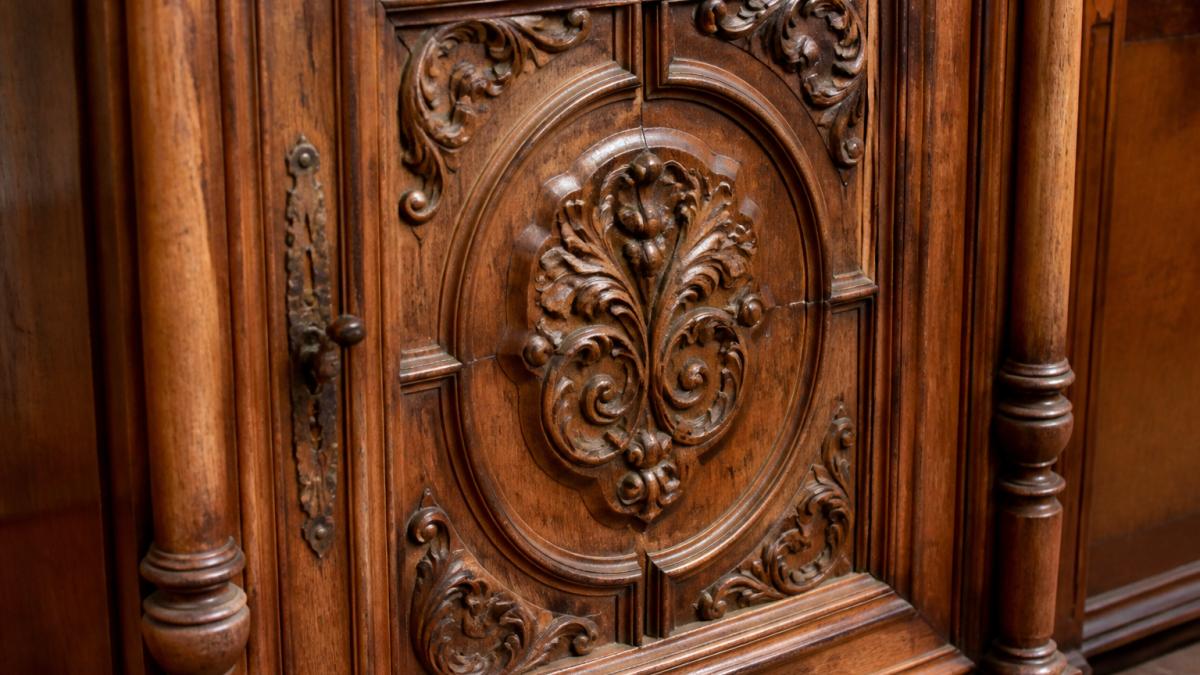
Carved cabinets represent the upper end of the market. Hand-carved details require skill that's expensive to replicate, and original carving is a strong authenticity marker.
Sideboards occupy a slightly different market segment. These lower, wider cabinets were designed for dining rooms. They're often more affordable than tall display cabinets but equally valuable to serious collectors because they're functional and visually balanced.
Marble-topped sideboards and cabinets add value if the marble is original and undamaged. Replaced marble reduces value. Cracked or repaired marble is a red flag for condition issues.
Specialized Cabinets: Wardrobe, Armoire, and Bonnetière
Wardrobes and armoires are large, freestanding pieces designed for clothing storage. These command high prices because they're genuinely rare, many were broken up or discarded as built-in closets became standard.
Bonnetières (hat cabinets) are smaller, specialized pieces designed to store women's hats. These are quite rare and appeal to collectors seeking unusual, historically specific furniture.
What to Check Before Buying an Antique European Cabinet
Before committing to a purchase, conduct a thorough inspection. What looks good in photos often reveals problems in person, and Old Europe Antique Home Furnishings recommends seeing significant pieces before finalizing a sale whenever possible.
Structural Integrity and Hidden Damage
Open every door and drawer. Listen for loose joints, a creaking sound when you gently move the piece indicates wood movement and potential structural issues. Check that drawers slide smoothly and that doors close properly without binding.
Look inside. Inspect the back panel for woodworm damage (small round holes indicate active or past infestation). Check shelves for warping or cracks.
Test stability. A cabinet should stand firmly without wobbling. If it rocks, the base may be warped or uneven, a sign of significant age or damage. This is fixable but affects value.
Finishing and Patina Authenticity
Run your hand across the surface. Original finishes feel different from refinished wood, they're often slightly rough, with visible wear patterns. Refinished wood feels smooth and uniform.
Look at wear patterns. Authentic age shows wear where hands naturally touch: around handles, along the top edge, on the feet.
Check the underside and back. These areas are rarely refinished, so they reveal the original wood color and finish. Compare the underside to the visible surfaces.
Light scratches, small dents, and minor finish wear are signs of authenticity. Pieces that look pristine and perfect are either recently refinished or reproductions.
Buying an antique European cabinet is an investment in history and craftsmanship. Our showroom in Austin, Texas, invites you to examine significant pieces in person and build a collection with confidence. Learn more about authentication standards from the American Society of Appraisers and consult professional appraisers for pieces you plan to insure or sell. When you're ready to explore authentic European cabinets, the Smithsonian's guide to antique furniture care offers guidance on preservation. SHOP NOW and discover timeless elegance for your home.
| Cabinet Type | Origin | Typical Period | Condition Factor | Value Range |
|---|---|---|---|---|
| Display Cabinet | French | 1800s | Original glass, intact shelves | Premium |
| Carved Sideboard | French | 1700s-1800s | Original finish, hand carving | Premium |
| Wardrobe | European | 1800s | Structural integrity, original hardware | High |
| Bonnetière | French | 1800s-1900s | Rare, documented | High |
| Victorian Cabinet | English/French | 1840s-1890s | Condition varies | Moderate-High |
| Art Deco Cabinet | French | 1920s-1930s | Original finish preferred | Moderate-High |
Frequently Asked Questions
How do I find out what my antique European cabinet is worth?
Start by identifying the cabinet's origin, period, wood type, and condition. Compare similar pieces listed on antique marketplaces and auction results to establish market value. For insurance or appraisal purposes, consult a certified antique appraiser who specializes in European furniture. They'll examine construction methods, maker's marks, and provenance to assign replacement value. Online price guides offer asking prices, but realized auction prices (what pieces actually sold for) provide more reliable valuation data. Document any repairs or restoration work, as this affects value assessment.
What factors affect the value of an antique European cabinet most?
Origin and period rank highest: French 18th-century pieces command premium prices, while Swedish and Italian cabinets vary widely by style and craftsmanship. Wood species matters, oak, cherry, and walnut typically hold stronger value than pine. Condition is critical; original finish and structural integrity preserve value, while extensive restoration can reduce it. Decorative details like hand carving, glass doors, and brass hardware add value. Provenance and documentation significantly impact desirability. Size, functionality (display versus storage), and rarity within its regional style also influence market price.
How can I tell whether a European cabinet is genuinely antique versus a reproduction?
Examine joinery: authentic antique pieces use hand-cut dovetails, mortise-and-tenon joints, and period-appropriate fasteners (wooden pegs, hand-forged nails). Look for wood patina, genuine age shows uneven wear, color variation, and tool marks consistent with hand construction. Check the back and interior for signs of age: original wood should show appropriate aging, not uniform staining. Reproductions often have machine-made uniformity, modern finishes, or anachronistic hardware. Study construction methods specific to the period and region. Request documentation of provenance, maker's marks, or signatures. When in doubt, have a certified appraiser or dealer authenticate the piece before purchase.
Do repairs or refinishing lower an antique cabinet's value?
Yes, but the impact depends on extent and quality. Minor repairs using period-appropriate methods and materials have minimal impact. However, complete refinishing, replacement parts, or heavy restoration can reduce value by 20-40% or more, especially for high-value pieces. Collectors and investors prefer original finish and minimal intervention. Structural repairs (replacing legs, fixing joints) are generally acceptable if done well. Always disclose any restoration work when selling or appraising. Documentation of repairs, including materials used and craftsperson credentials, helps preserve residual value. Authentic patina and wear are often considered desirable markers of age.