


7 French Provincial Furniture Wood Types to Know
Last Updated: November 22, 2026
Quick Summary
French provincial furniture wood types follow regional geography: oak dominated the north, walnut ruled the south, and fruitwoods like cherry, pear, apple, and plum filled in everywhere else. Provincial furniture wood was whatever grew nearby, so a Norman piece should be oak and a Provençal piece should lean walnut. Solid local hardwood, not veneer, is typical of provincial pieces.
- Oak built northern pieces in Normandy, Brittany, and the Loire Valley, darkening to a deep honey or near-black patina.
- Walnut was the luxury wood of the warmer south and center, with a chocolate-to-purple undertone that deepens with age.
- Fruitwoods such as cherry, pear, apple, plum, and peach were used for chairs, small tables, and inlay work.
- Check unfinished surfaces like drawer interiors and undersides, since stain and wax change how grain reads.
- Veneer over a pine or poplar core was period-correct economy on southern pieces, not automatically a defect.
Table of Contents
- Why French Provincial Furniture Wood Types Matter
- The Types of Wood Used for Antique Furniture: A Regional Story
- Vintage French Provincial Furniture Wood Types: What Changed Over Time
- How to Identify Wood in an Existing Piece
- Solid Wood vs. Veneer and Mixed Construction
- Care and Restoration by Wood and Finish
- Shop Authentic French Provincial Pieces at Old Europe Antique Home Furnishings
- Frequently Asked Questions
Why French Provincial Furniture Wood Types Matter
Walk through any antique showroom and you will hear the same phrase: "French provincial." It sounds like a single style. It is not.
This guide from Old Europe Antique Home Furnishings covers the woods that define provincial pieces, how regional geography shaped them, and how to identify them in a piece you already own.
The short version: provincial cabinetmakers used what grew nearby. Oak dominated the north, walnut ruled the south, and fruitwoods filled in everywhere else.
The Types of Wood Used for Antique Furniture: A Regional Story
Before railroads and national lumber yards, a cabinetmaker's material list was written by his local forest. That constraint produced the regional variation collectors now prize: a Norman armoire and a Provençal commode can share a silhouette yet be built from entirely different species.
Understanding this geography is the fastest route to identifying where a piece came from, and it protects you from reproductions that use whatever hardwood was cheap.
Oak: The Backbone of Northern Provincial Pieces
Oak built the north. Normandy, Brittany, and the Loire Valley sat on dense oak forests, and provincial joiners worked that hardwood into armoires, buffets, and farmhouse tables.
Look for a prominent grain pattern, often with rays visible on quarter-sawn surfaces.
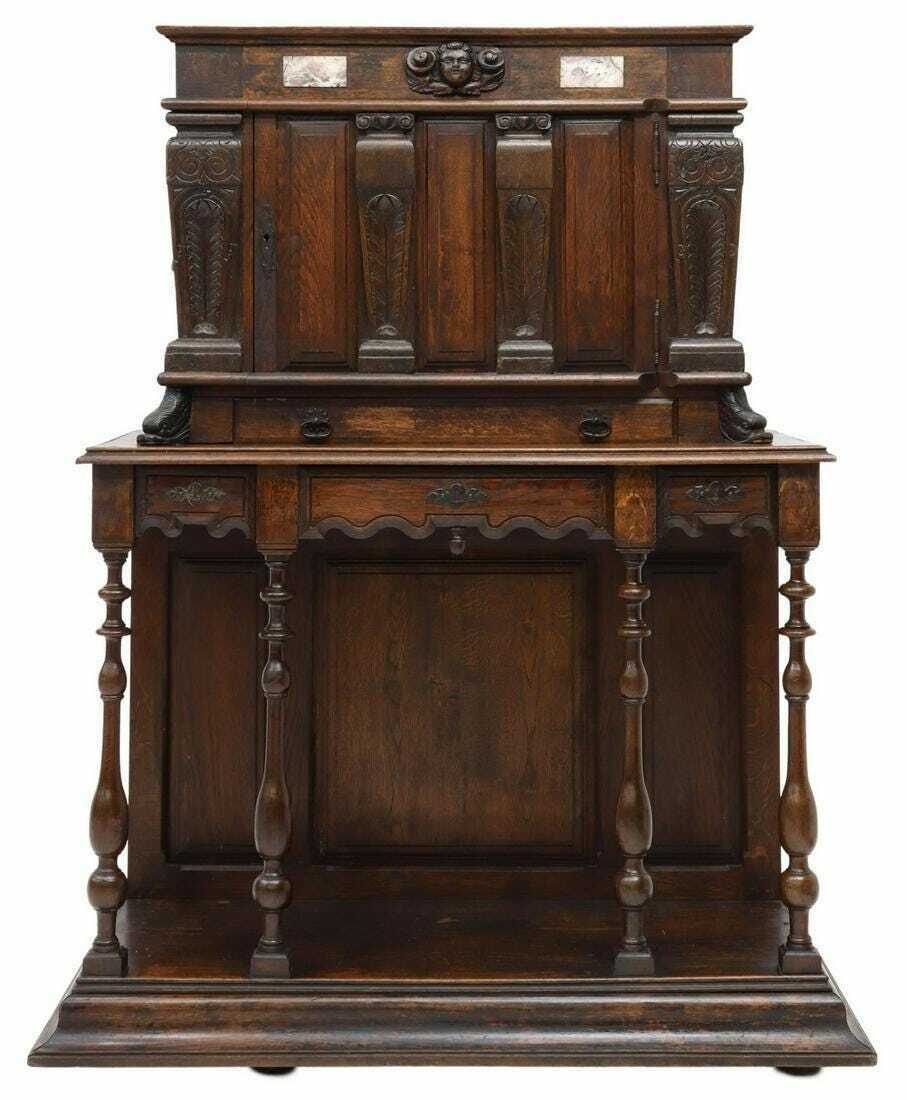
Oak-built pieces like the oak credence cupboard with marble plaques and the French oak credence cupboard carved with masks show the northern style at its most elaborate.
Walnut: The Prized Wood of the South
Walnut was the luxury of the provincial world.
The wood takes a lacquered finish beautifully, which is why southern pieces often show a smooth, dark sheen rather than the waxed texture of northern oak.
Watch out: walnut was expensive enough that cabinetmakers sometimes used it only on visible surfaces, with a secondary wood underneath.
Cherry, Pear, Apple, and Plum: The Fruitwood Family
Fruitwoods are the quiet workhorses of provincial furniture.
Cherry warms to a reddish-brown over time. Pear stays paler and takes stain evenly, making it a favorite substitute when walnut was out of reach.
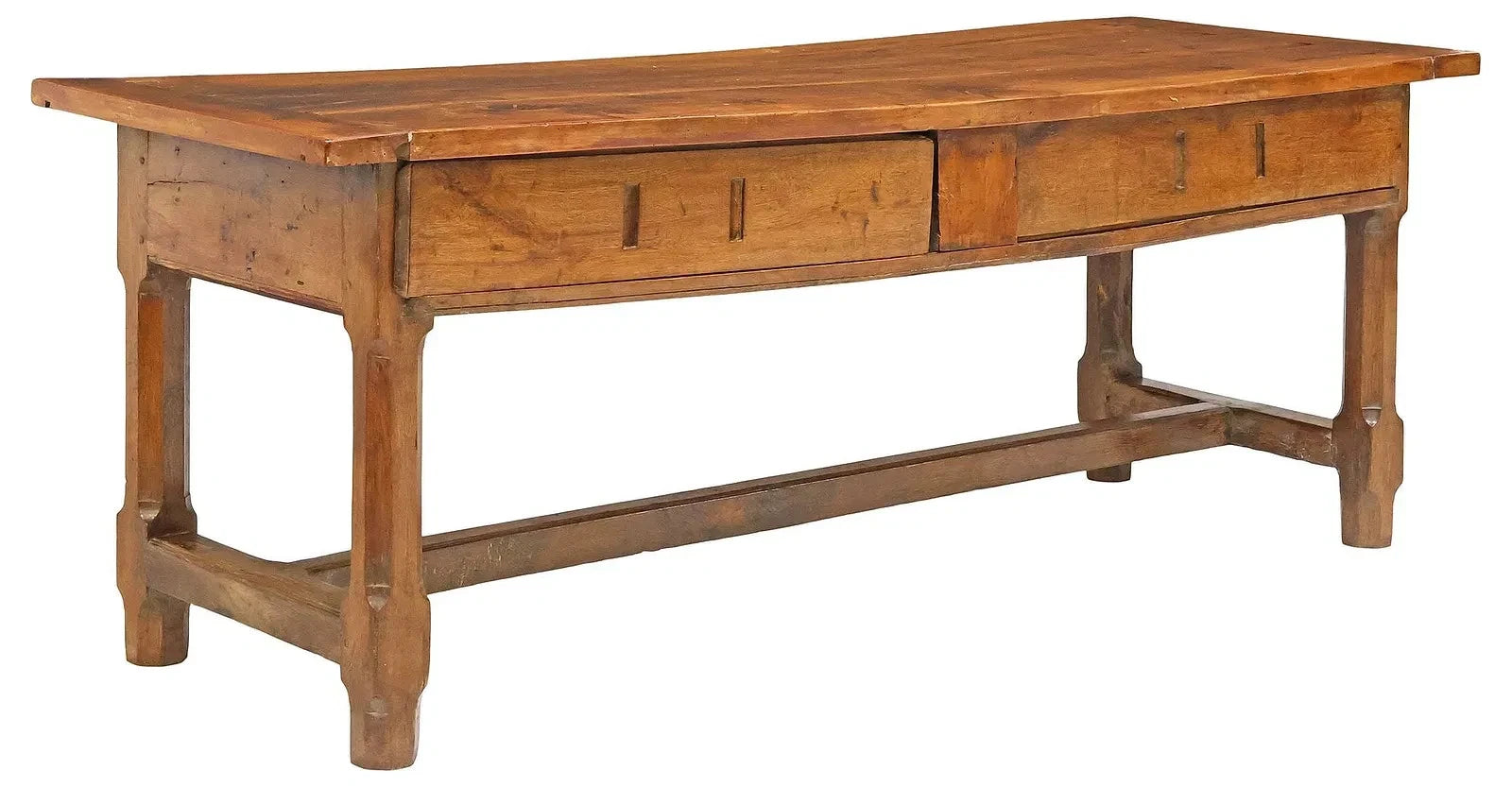
Fruitwood pieces often sit alongside oak in the same room. A fruitwood and oak farmhouse table with a plank top and breadboard ends shows how provincial joiners combined species.
Vintage French Provincial Furniture Wood Types: What Changed Over Time
The woods did not change as much as the finish did.
By the late 1800s, demand from collectors and city buyers pushed some workshops toward reproduction furniture built to look older than it was, often using whatever hardwood was available regardless of regional accuracy.
When you evaluate a vintage or antique piece, ask what region it claims and whether the wood matches. A southern-style commode built from northern oak is a warning sign.
How to Identify Wood in an Existing Piece
Most identification advice stops at "look at the grain." That is a start, not a method. A reliable read combines four kinds of evidence, grain, end grain, unfinished surfaces, and construction clues, and then admits what you still cannot confirm.
Step 1: Read the grain on a finished surface
Start with the largest flat area you can see in raking light. Oak shows open, coarse grain with visible medullary rays on quarter-sawn surfaces, thin, silvery flecks that run across the grain.
Grain alone narrows the field. It rarely closes it, because stain, wax, and age all sit on top of the grain and change how it reads.
Step 2: Find an unfinished surface
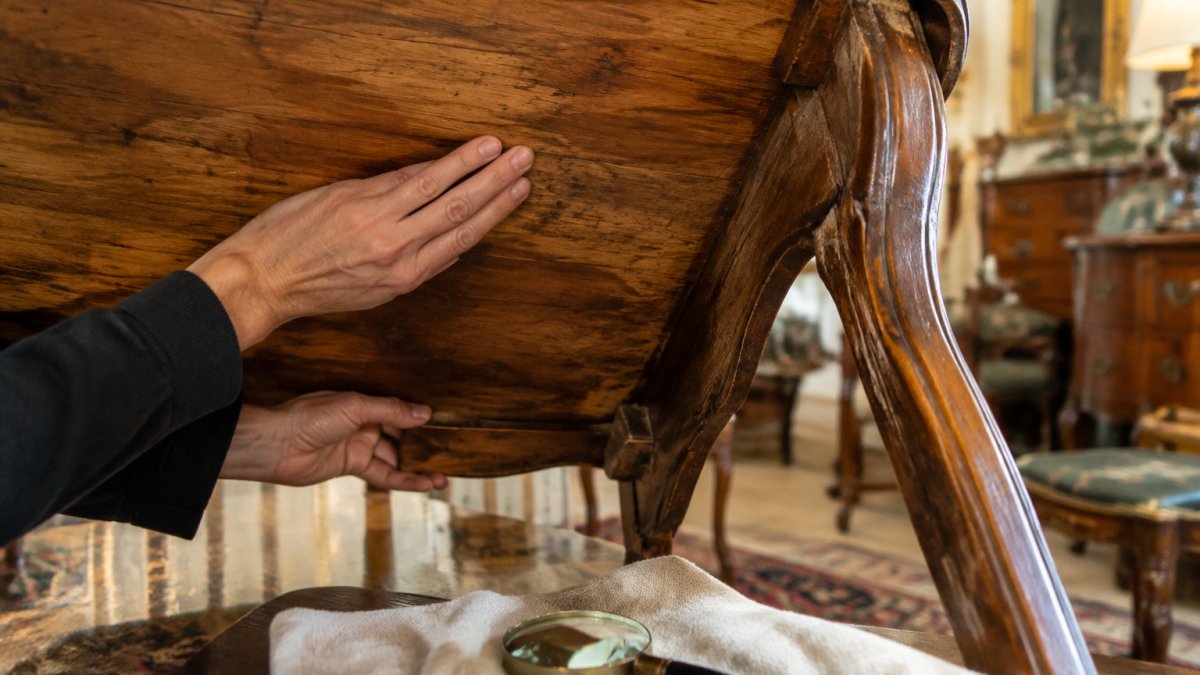
The underside of a table, the inside of a drawer, the back of a cabinet, and the inside of a carcass are where identification gets reliable. These surfaces usually escaped stain and wax, so you see the raw wood. If the raw wood differs from the finished surface, you are probably looking at veneer over a secondary wood, common and not automatically a defect.
Step 3: Examine the end grain
End grain is the most diagnostic surface on a piece, and the least available. Look at the bottom of a leg, the edge of a drawer side, or a hidden rail. Oak shows large, open pores visible without magnification. Walnut shows smaller pores in a loose pattern. Pear and apple show fine, dense pores that look almost solid.
Step 4: Use weight, sound, and smell as tiebreakers
Oak and walnut feel heavy for their size; chestnut and fruitwoods feel lighter. Tap a hidden panel with a knuckle: dense hardwoods give a tight, high sound, softer secondary woods a duller thud. On raw interior surfaces, old walnut and oak carry a dry, slightly bitter scent; fresh stain and solvent smell sharp and chemical. No single check is decisive, but together they separate candidates.
Step 5: Read the construction, not just the wood
Construction often identifies the wood faster than grain does. Hand-cut dovetails, irregular saw marks, and hand-planed surfaces point to an older piece where the wood is likely original. Uniform machine dovetails, perfectly consistent thickness, and Phillips-head screws point to a later piece where the visible wood may be veneer or a substitute species.
What you cannot tell from a photo
A photograph flattens grain, hides end grain, and cannot show weight, smell, or the raw wood under a finish. Color is also unreliable because white balance and editing change it. Photo-based identification can suggest a species family, oak versus walnut versus fruitwood, but cannot confirm it. Treat any online identification as a hypothesis to test in person.
What finish hides
A dark lacquered finish can make oak read as walnut, and a bleached or painted finish can hide grain entirely. Wax buildup fills open grain and softens the texture that would otherwise identify oak.
A short checklist you can carry into a showroom:
- Raking light on the largest flat surface: open grain or tight grain?
- Underside and drawer interiors: same species as the top, or different?
- End grain at a leg bottom or drawer edge: large pores or fine pores?
- Weight and tap tone: heavy and tight, or light and dull?
- Construction: hand-cut or machine-cut joinery?
Watch out: a single clue is never enough. Oak with a dark stain can mimic walnut, and walnut veneer over poplar can mimic solid walnut until you see the edge.
Solid Wood vs. Veneer and Mixed Construction
"Solid wood" and "veneer" are treated as opposites in most buying advice. In provincial furniture they were often partners. Understanding why cabinetmakers mixed construction, and where they drew the line, separates rejecting a good piece from accepting a bad one.
What solid, veneer, and mixed actually mean
Solid wood means a structural part is cut from one species through and through: a leg, a stretcher, a chair rail, a table apron. Veneer means a thin slice of fine wood glued over a core of cheaper wood or pine.
Provincial cabinetmakers used all three. The best pieces are solid where strength matters and honest about where veneer appears.
Why provincial makers used veneer
Walnut was expensive, and a southern commode with a large flat top or door panel could consume a lot of it.
Veneer also solved a movement problem. A wide solid panel expands and contracts with humidity and can split; a veneered panel over a stable core moves less, making veneer the more durable choice on case pieces with large flat surfaces.
Where solid wood matters most
Load-bearing parts should be solid: legs, stretchers, chair frames, table aprons, and the rails that carry a case. These parts take stress and cannot be veneered without failing. When you inspect a piece, check these areas first. A solid oak or walnut leg with visible end grain at the bottom is a good sign.
How to tell solid from veneer in practice
| What to Check | Solid Wood | Veneer or Mixed |
|---|---|---|
| Edge of a tabletop | Grain continues around the edge | Thin line where the top layer meets the core |
| Underside | Same species as the top | Different species or plywood core |
| Wear spots | Dents and scratches follow grain | Chips reveal a lighter layer underneath |
| Weight and feel | Heavy, dense | Lighter, sometimes hollow-sounding |
| End grain at leg bottom | Visible pores and growth rings | Seam, wrap, or no end grain |
| Drawer sides | Solid secondary wood | Plywood or particleboard core |
A common pattern on period pieces is a solid walnut or oak frame with veneered door panels and pine or poplar drawer sides. That combination is normal. The problem is a piece sold as solid that shows a plywood core, a particleboard drawer bottom, or a veneered leg.
Reproduction shortcuts to watch for
Later reproduction furniture often used veneer to imitate a solid piece and then aged the surface artificially.
Watch out: veneer is not automatically a defect, and solid is not automatically period. Judge the piece by where the solid wood appears, what the core is made of, and whether the construction matches the region and period the piece claims.
Care and Restoration by Wood and Finish
Oak and walnut want different care. Treat them the same and you will dull one and dry out the other.
Oak is forgiving. A waxed finish on oak benefits from a thin coat of natural wax once or twice a year, buffed with a soft cloth.
Walnut prefers oil.
Painted and lacquered finishes should never see oil. Clean them with a barely damp cloth and keep them out of direct sun.
For deeper work, our guides on repairing scratches on 18th century wood and choosing natural oils for antique furniture restoration walk through the steps without risking the patina.
Shop Authentic French Provincial Pieces at Old Europe Antique Home Furnishings
Wood type is the fastest way to judge a provincial piece, and it is the detail reproductions rarely get right. If you are ready to buy with confidence, our buyer's guide to authentic French Provincial furniture covers what to inspect before you commit.
At Old Europe Antique Home Furnishings, we curate European antiques dating back to the 16th century. Our showroom is available for viewing by appointment.
Frequently Asked Questions
What wood is French provincial furniture made of?
French provincial furniture was made from locally available woods, so the species depends on the region. Oak dominated the north, walnut was common in the south, and fruitwoods like cherry, pear, apple, and plum appeared throughout. Beech and chestnut also show up in provincial pieces. Most authentic antique examples use solid wood rather than veneer, though finer pieces sometimes incorporated veneered panels.
How can you identify the wood used in an antique French provincial piece?
Start by looking at the grain pattern on an unfinished area, such as the underside of a table or the inside of a drawer. Oak has a prominent, open grain; walnut shows a darker, tighter grain; cherry and fruitwoods have a fine, close texture. Check the patina and wear patterns, and compare the color of protected areas to exposed ones. A magnet test can reveal hidden nails.
Is French provincial furniture usually made from solid wood?
Yes, most authentic antique French provincial furniture is solid wood. Provincial craftsmen used the local timber they had on hand, building frames, legs, and tops from oak, walnut, or fruitwood. Veneer and mixed construction appear more often in later reproduction pieces or high-style Parisian furniture. When examining a piece, look for consistent grain running through the edges and joints, which signals solid construction.
How does wood type affect the value of French provincial furniture?
Wood type influences value through rarity, grain beauty, and regional provenance. Walnut and cherry pieces often command higher prices than oak because of their warmer tone and finer grain. Fruitwood pieces with visible patina and original finish are especially sought after. However, condition, age, and authenticity matter more than species alone. A well-preserved oak piece from the 1700s can be worth more than a later walnut reproduction.
