


How to Get Antique Furniture Appraisal for Insurance
Last Updated: November 24, 2026
Quick Summary
An antique furniture appraisal for insurance is a written, dated valuation of a specific piece prepared by a qualified appraiser, used to set coverage and support claims. Most standard homeowner policies cap coverage for antiques well below what the pieces are worth, so a professional valuation is often the only way to close that gap.
- An appraisal is required when your insurer asks, you schedule a piece, or you file a claim above a set threshold.
- Insurance value differs from market value; your policy language decides whether replacement cost or fair market value applies.
- Ask whether the appraiser writes USPAP-compliant reports and whether insurers have accepted their reports before.
- An appraiser who charges a percentage of the value they assign has a conflict of interest.
- Update an insurance appraisal every three to five years, and sooner after any major market shift.
Table of Contents
- Why You Need an Antique Furniture Appraisal for Insurance
- Insurance Value vs. Market Value: What Your Policy Actually Pays
- The Antique Furniture Appraisal Checklist: What to Prepare
- How to Find a Qualified Appraiser and Verify Insurer Acceptance
- Antique Furniture Appraisal Cost and What the Report Includes
- Online Antique Furniture Appraisal for Insurance: When It Works
- How Often to Update an Insurance Appraisal
- Protecting Your Collection: Next Steps Before Your Appraisal
- Frequently Asked Questions
Why You Need an Antique Furniture Appraisal for Insurance
An antique furniture appraisal for insurance is a written, dated valuation of a specific piece prepared by a qualified appraiser, used to set coverage and support claims. Most standard homeowner policies cap coverage for antiques well below what the pieces are worth, so a professional valuation is often the only way to close that gap. Too many collectors learn this after a fire or a burst pipe, when it is far too late to fix.
Here is the core problem. Your policy pays a limit, not a sentiment. Without paperwork, the insurer guesses, and the guess usually favors the insurer.
When an Appraisal Is Required vs. Recommended
An appraisal is required when your insurer asks for one, when you schedule a piece on your policy, or when you file a claim above a set threshold. It is recommended for any piece you could not comfortably replace out of pocket.
A few common triggers:
- You are adding a rider or scheduling a specific item
- You inherited furniture and need to establish a value
- You are settling an estate or dividing assets
- You are moving a collection or lending pieces to a show
- A piece has risen in value since your last valuation
If none of these apply, a written appraisal is still cheap peace of mind.
Insurance Value vs. Market Value: What Your Policy Actually Pays
Insurance value is not the same as what a buyer would pay on the open market. This is the single most misunderstood point in the whole process.
Replacement cost is what it would take to buy a similar piece today, in similar condition, from a dealer. Fair market value is what the piece would sell for between a willing buyer and a willing seller. Resale value is what you would actually get, often lower, because dealers buy at wholesale.
Your policy language decides which one applies. Actual cash value policies typically pay replacement cost minus depreciation (How is the settlement amount determined?). Agreed value policies pay a set number you and the insurer sign off on. Read the settlement clause before you assume anything.
For a deeper look at how to track and prove value over time, our guide on how to document antique furniture value walks through the paperwork that keeps a claim on track.
The Antique Furniture Appraisal Checklist: What to Prepare
A prepared owner gets a faster, more accurate appraisal. An unprepared one pays for a second visit. The checklist below is built around the evidence an appraiser actually uses to value antique furniture and the documentation an insurer may ask for after a loss.
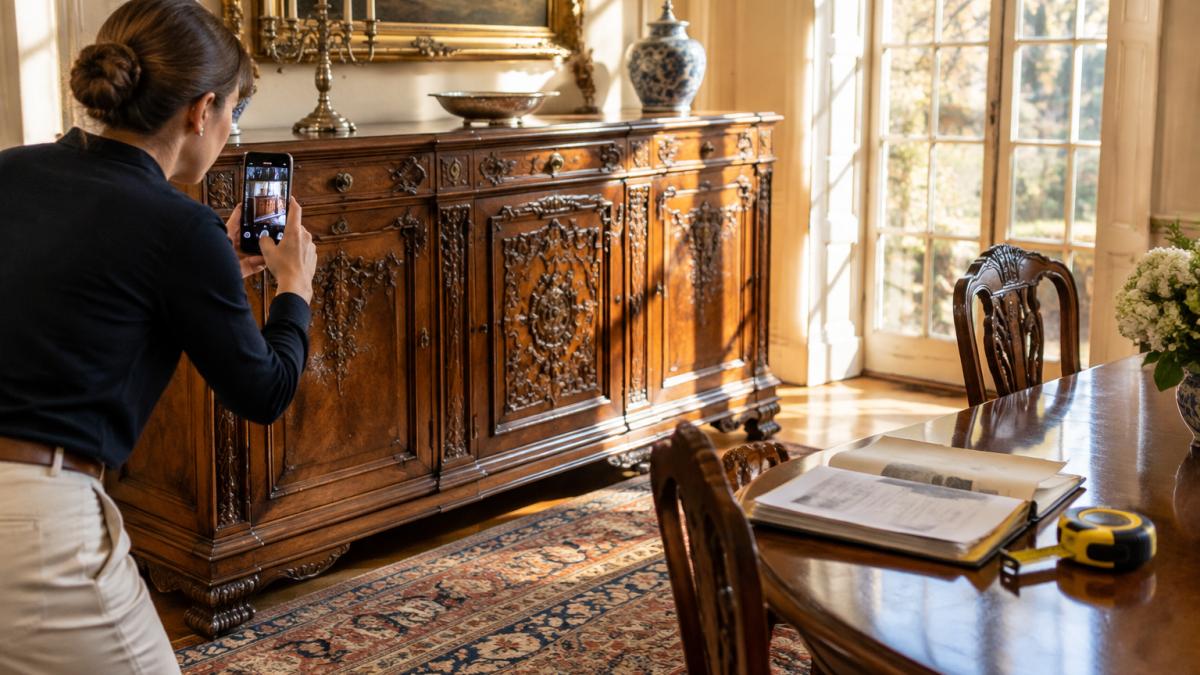
Work through this list before the appraiser arrives:
- Clear each piece and photograph it from all four sides plus the top
- Capture close-ups of maker's marks, signatures, and labels
- Photograph damage, repairs, and old restoration honestly
- Measure height, width, and depth in inches
- Gather receipts, auction records, and family history
- Note any provenance: prior owners, exhibitions, published references
- List every piece with a short description and location in the home
- Have the appraiser's access route clear, especially for large case pieces
The last point matters more than people expect. A 103-inch-tall carved walnut sideboard is not moving for a quick look. If you want to see how we handle condition notes on pieces like that, browse our antique sideboards.
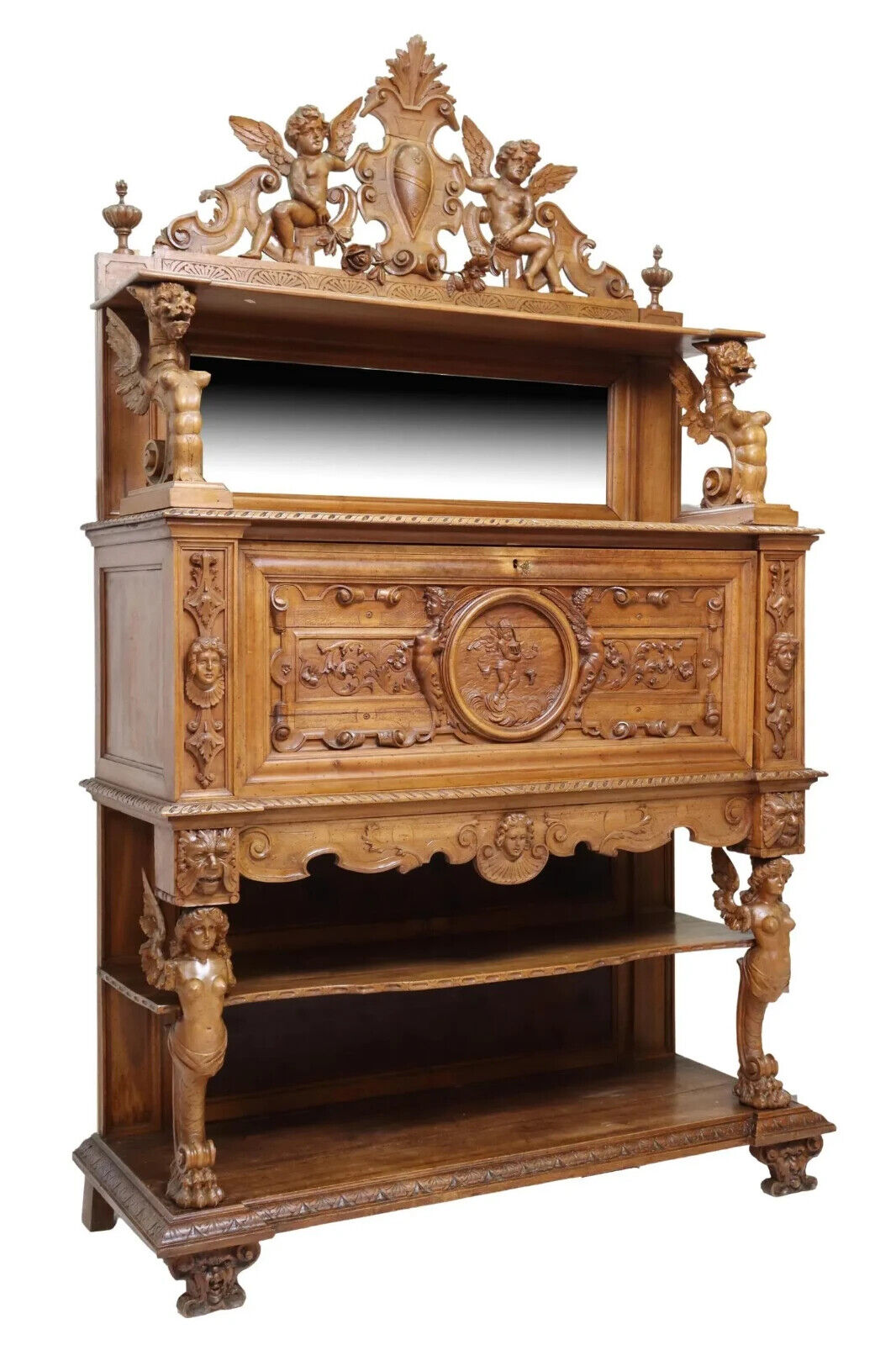
Beyond the basics, gather the furniture-specific evidence that separates a defensible appraisal from a guess. Maker's marks, stamps, and labels help identify origin and period. Construction details such as hand-cut dovetails, secondary woods, and period hardware support authenticity. Repairs and restoration should be documented rather than hidden, because an appraiser who spots undisclosed repairs will discount the piece and may question the rest of the report. Provenance, including prior owners, auction records, and published references, can move value meaningfully for signed or rare pieces.
For a full walkthrough on getting clean photos, read how to photograph antique furniture for appraisal.
How to Find a Qualified Appraiser and Verify Insurer Acceptance
Finding a qualified appraiser starts with credentials, not with a phone book. Look for a certified appraiser who writes USPAP-compliant reports and specializes in personal property, specifically furniture.
Ask three questions before you hire anyone:
- Which credentialing body certified you, and what is your specialty?
- Will the report follow USPAP standards?
- Have insurers accepted your reports before, and can you share a sample?
That third question is the one most owners skip. A beautiful report your insurer rejects is worthless.
How to verify insurer acceptance: call your agent before the appraisal and ask what the underwriter requires. Some want the appraiser's credentials listed in the report. Some want a specific valuation date. Some want the report to state the intended use, which is insurance coverage. Get those requirements in writing, then hand them to the appraiser.
If you are building a collection with an eye on long-term value, our article on certified antique furniture for investment portfolios explains how appraisal documentation supports insurer acceptance.
Antique Furniture Appraisal Cost and What the Report Includes
Antique furniture appraisal cost is driven by scope, research time, and liability, not by a single flat rate. Appraisers generally bill either hourly or per piece, and travel is often added separately.
| Appraisal Type | Typical Billing Basis | Best For | Turnaround |
|---|---|---|---|
| In-person, single piece | Flat per-piece fee plus travel | One high-value item | Days to two weeks |
| In-person, full collection | Hourly rate or day rate | Estates, whole-home inventories | One to three weeks |
| Online or desktop review | Per-piece fee, lower rate | Preliminary values, low-value pieces | Often under a week |
| Estate or tax appraisal | Hourly, formal report | Estate settlement, estate tax | Two to four weeks |
Ask upfront whether the quote includes travel, photography, and a written report, or whether those are add-ons. A written report is the deliverable your insurer will read, so confirm it is included before you book.
A proper appraisal report should include:
- A clear statement of intended use and valuation date
- A full description of each piece, including dimensions and materials
- Condition assessment, with repairs and flaws noted
- The valuation method used and the comparable sales behind it
- The appraiser's signature, credentials, and report date
For insurance purposes, the report also needs to state the intended use as insurance coverage, identify the valuation approach (replacement cost or fair market value, as your policy requires), and include enough identifying detail that the insurer can match the report to the scheduled item. Some underwriters want the appraiser's qualifications summarized in the report itself, and some want photographs embedded rather than attached separately.
Watch out: an appraiser who charges a percentage of the value they assign has a conflict of interest. A fee based on the outcome is a red flag, and insurers know it. Ask instead for a flat or hourly quote in writing before the inspection.
Online Antique Furniture Appraisal for Insurance: When It Works
An online antique furniture appraisal for insurance works as a screening tool, not as a final insurance document. Most insurers will not accept a desktop valuation as the sole basis for a scheduled rider on a high-value piece.
Where online appraisals earn their place:
- Getting a rough read before you commit to a full in-person visit
- Valuing a large group of lower-value pieces
- Sorting which items deserve a formal report
Where they fall short: condition. A photo cannot show you a repaired leg, a replaced veneer patch, or old woodworm activity. Those details change value, sometimes sharply. If a piece carries real money, an in-person inspection is the only defensible route.
How Often to Update an Insurance Appraisal
Update an insurance appraisal every three to five years, and sooner after any major market shift. Antique furniture values move with collector demand, and a stale valuation can leave you underinsured.
Update immediately when:
- You buy or sell a significant piece
- A piece is restored, refinished, or repaired
- You move to a new home or a different climate
- Your insurer changes policy terms
- You file a claim and the settlement is disputed
Keep the old reports. A paper trail of rising values supports your case if a claim is challenged.
Protecting Your Collection: Next Steps Before Your Appraisal
Protection starts before the appraiser knocks. Get the environment right first, because condition drives value and a claim.
Humidity is the quiet killer of antique wood. Our guide on protecting antique furniture from humidity covers the practical steps. And if you are tempted to fix a piece up before valuation, read restoration vs preservation first. Aggressive restoration can lower insured value, not raise it.
A few final moves:
- Store documents and photos in the cloud and in a fireproof box
- Keep a current inventory with locations
- Schedule pieces on your policy once the report lands
- Review coverage limits against the new numbers
The gap between what your policy pays and what your collection is worth is closed by paperwork, not luck. Old Europe Antique Home Furnishings offers a curated selection of authentic European antiques, with pieces dating back to the 16th century. Our showroom is available for viewing by appointment. Get started with Old Europe Antique Home Furnishings and protect the pieces you have spent years finding.
Frequently Asked Questions
How do I get antique furniture appraised for insurance?
Start by photographing each piece and gathering provenance, receipts, and prior appraisals. Then hire a qualified appraiser who prepares USPAP-compliant reports your insurer accepts. Ask whether the report uses replacement value, since that is what most policies require for claim settlement. Review the finished report for accurate descriptions, measurements, and valuation dates, then submit it to your agent to schedule the pieces or raise your policy limits.
How much does an antique furniture appraisal cost?
Most appraisers charge an hourly fee or a flat rate per item, and appraisal fees vary with the scope of the work. Complex collections with rare provenance, fine art, or extensive documentation cost more. Ask upfront whether the fee includes the written report, photographs, and a site inspection. An online antique furniture appraisal for insurance is usually cheaper but may not satisfy every insurer, so confirm acceptance before you book.
How often should I update an insurance appraisal?
Review your appraisal every three to five years, or sooner if the market shifts sharply or you add significant pieces. Update immediately after a restoration, a move, or a major purchase. Insurers may require a current valuation date when you file a claim, and an outdated report can leave you underinsured. Keep digital copies of every report and note the review date on your calendar.
Can I get an antique furniture appraisal online?
Yes, many appraisers offer online reviews from clear photographs, measurements, maker's marks, and provenance. Online appraisals suit a preliminary estimate or a single piece, but insurers often require an in-person inspection for high-value items. Ask the appraiser whether the report is USPAP-compliant and whether your insurer will accept a remote valuation before you rely on it for coverage.
