


Authentic Historical Artifacts for Private Collections
Table of Contents
- What Makes Historical Artifacts Authentic
- How to Authenticate Antiques Before Buying
- Understanding Historical Artifacts Provenance
- Artifact Categories for Collectors: Coins, Jewelry, Books, and More
- Legal Restrictions and Cultural Heritage Laws
- Ethical Antique Collecting: Sourcing Responsibly
- Antique Books for Private Collections
- Condition, Conservation, and Long-Term Care
- Frequently Asked Questions
Last Updated: October 17, 2026
What Makes Historical Artifacts Authentic
Authenticity in authentic historical artifacts begins with provenance and physical evidence. An authentic artifact carries documentation of its ownership history, physical markers consistent with its claimed era, and materials that match period standards.
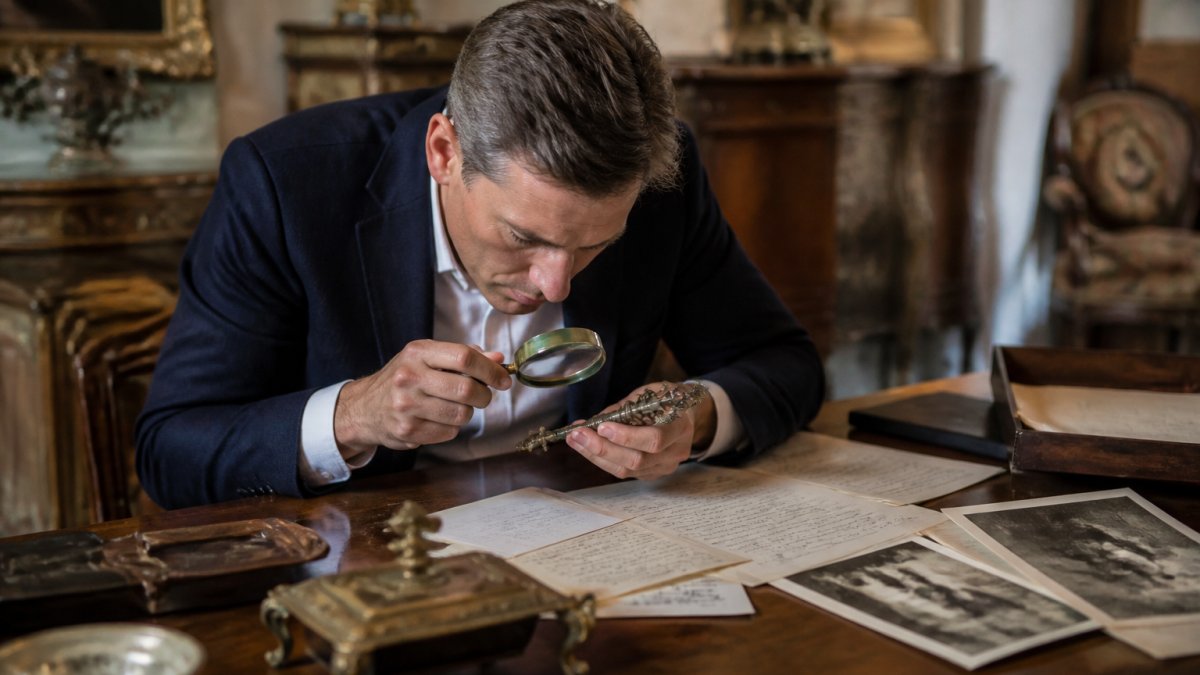
The difference between genuine and reproduction artifacts often comes down to construction technique and material degradation. Authentic pieces show wear patterns consistent with age. Reproductions, no matter how skillfully made, typically display uniform wear or lack the patina that develops over centuries. A Roman gold pendant from 100-300 AD, like the Antique Pendant, Ancient Roman, Large, Gold, From 100 TO 300 AD ($2,068.00) in our collection, displays intricate applied scrolling motifs and bead designs that reflect genuine Roman craftsmanship techniques.
Collectors should understand that authentication requires more than visual inspection. According to museum conservation standards from the American Alliance of Museums, proper authentication combines visual analysis, material testing, and historical documentation. Many buyers overlook the importance of examining how an artifact was constructed, the tools used, the joinery methods, the finishing techniques all reveal whether a piece is period-accurate.
How to Authenticate Antiques Before Buying
Start authentication by requesting complete provenance documentation. This should include previous ownership records, any museum documentation, condition reports, and certificates of authenticity. A legitimate dealer provides this information willingly, hesitation is a warning sign. The guidelines for evaluating provenance from the Association of Art Museum Directors emphasize that clear ownership history is essential for establishing authenticity and value.
Physical examination comes next. Inspect materials closely. Metals should show appropriate oxidation patterns. Wood should display grain patterns and wear consistent with age. Textiles should have fading and fiber degradation that matches their claimed era. Many collectors find that examining similar authenticated pieces helps develop an eye for genuine artifacts.
Request condition reports from reputable conservators. These professionals document existing damage, past repairs, and overall preservation state. A thorough condition report protects your investment and provides baseline documentation for insurance purposes. Never rely solely on seller descriptions, independent assessment adds credibility to your purchase.
Understanding Historical Artifacts Provenance
Provenance is the documented ownership history of an artifact from creation to the present day. Strong provenance establishes authenticity and significantly impacts value. A piece with gaps in its ownership history raises questions about where it traveled and how it was acquired during those undocumented periods.
Provenance documentation should trace back as far as possible. Ideally, you'll find records showing the artifact's location through multiple decades or centuries. Museum records carry particular weight, if a piece was previously in a recognized institutional collection, that strengthens authenticity claims considerably. The 1696 Antique Book, History of Catholic Church Councils, Marco Battaglini Italian ($1,955.00) in our inventory includes provenance documentation showing its scholarly significance and historical context.
Gaps in provenance don't automatically mean an artifact is inauthentic. Many pieces changed hands privately before modern record-keeping systems existed. What matters is transparency about what is known and what remains undocumented. A reputable dealer clearly states where documentation ends and acknowledges the limitations.
Artifact Categories for Collectors: Coins, Jewelry, Books, and More
Collectors encounter several major artifact categories, each with distinct authentication challenges and market characteristics.
Coins and currency represent one of the oldest collecting categories. Ancient coins from Roman, Greek, and Egyptian civilizations are widely available, but reproductions are equally common. Authentic coins show wear patterns specific to circulation, uneven high-point wear rather than uniform surface aging.
Jewelry and decorative objects like the Roman pendant mentioned earlier demand close examination of construction methods. Ancient artisans used hand-forging techniques that leave distinctive marks. Modern reproductions often show tool marks from electric equipment or casting methods unknown in the claimed period.
Antique books form a distinct category requiring specialized knowledge. The Antique Essays of Michel de Montaigne in French, 1659, 17th Century ($899.00) features leather binding and hand-stitched construction.

Furniture and architectural elements require understanding period-specific joinery, wood species availability, and finishing techniques. Spanish painted leather chests like the Chest, Antique, Spanish Painted, Leather & Wood Chest, 17th C., 1600s/1700s ($8,319.89) showcase construction methods and decorative traditions specific to their era and region.
| Artifact Category | Authentication Focus | Key Indicators | Common Risks |
|---|---|---|---|
| Coins | Metal composition, wear patterns | High-point circulation wear, period-accurate strike | Casting reproductions, artificial aging |
| Jewelry | Construction method, material | Hand-forging marks, period-correct techniques | Modern tool marks, incorrect alloys |
| Books | Paper, binding, typography | Hand-stitched binding, period typefaces | Machine binding, modern paper |
| Furniture | Joinery, wood species, finish | Period-correct construction, appropriate wood | Modern fasteners, anachronistic materials |
| Maps & Documents | Paper quality, ink, printing | Hand-colored details, period printing methods | Reproductions on aged paper |
Legal Restrictions and Cultural Heritage Laws
Collectors must understand laws governing artifact acquisition and ownership. Many countries restrict export of cultural property, and some artifacts cannot legally enter private collections regardless of provenance.
The Archaeological Resources Protection Act (ARPA) prohibits collecting artifacts from federal lands in the United States. Items excavated from protected archaeological sites cannot be legally purchased or possessed. Before acquiring any artifact with an excavation history, verify that it was legally removed and exported according to applicable laws at the time of discovery.
Cultural property laws vary significantly by country. Many nations claim ownership of artifacts removed before specific dates, even if those removals were legal when they occurred. A piece that was legitimately acquired decades ago might now be subject to repatriation claims. Work with dealers who understand these complexities and maintain transparent records.
According to UNESCO guidelines on cultural property, international agreements establish frameworks for protecting cultural heritage. Responsible collectors verify that artifacts were not stolen from museums, archaeological sites, or cultural institutions. This protects both your investment and respects the cultural significance of historical pieces.
Ethical Antique Collecting: Sourcing Responsibly
Ethical collecting means understanding the difference between legitimate antiquities and looted artifacts. An artifact can be genuinely old yet illegally acquired, making it both inauthentic from an ethical standpoint and legally risky to own.
Antique Historian Books, 1761 Chinese Records Of The Grand, Shiji, 1600s! →
Responsible collectors prioritize artifacts with documented legal acquisition. This means verifying that pieces were exported legally according to the laws in effect when they left their country of origin. Many nations now have strict cultural property laws, but older pieces may have been acquired before such protections existed. Documentation showing legal export at the time of removal provides ethical confidence.
Support dealers who actively investigate provenance and refuse to purchase items with suspicious histories. Old Europe Antique Home Furnishings carefully sources every piece, prioritizing collections with clear ownership records and legal documentation.
The repatriation movement reflects growing recognition that some artifacts belong in their cultures of origin. Ethical collectors respect this principle and avoid pieces that cultural institutions or governments are actively seeking to recover. This stance protects your collection's long-term viability and demonstrates respect for cultural heritage.
Antique Books for Private Collections
Antique books represent one of the most accessible and rewarding collecting categories. Unlike large furniture pieces, rare books occupy minimal space while offering significant historical and intellectual value. Building a meaningful book collection requires understanding what makes certain volumes valuable and how to evaluate condition and authenticity.
Rarity and historical significance drive book values. Early printed editions, limited print runs, and books with documented scholarly importance command premium prices. The Antique Historian Books, 1761 Chinese Records Of The Grand, Shiji ($4,245.76) represents a complete 16-volume set of hand-stitched, woodblock-printed volumes from the Qing Dynasty.

Condition directly impacts both value and usability. Collectors must decide whether they want reading copies or display pieces. The Book, 1684 Dutch, Council of Trent ($1,183.76) features vellum binding and complete collation.

Specialized knowledge helps collectors identify valuable editions. First editions typically command higher prices than later printings. Original language editions often exceed translations in value. Understanding a book's publication history, whether it was a limited run or mass-produced, informs purchasing decisions.
Condition, Conservation, and Long-Term Care
Proper conservation extends artifact lifespan and preserves value. Understanding how to store and handle historical pieces prevents deterioration that can be costly or impossible to reverse.
Environmental control matters significantly. Temperature fluctuations and humidity variations damage artifacts. Maintain consistent conditions, ideally 65-70°F with 45-55% relative humidity. Avoid direct sunlight, which fades colors and degrades materials.
Handling practices prevent accidental damage. Wear cotton gloves when touching artifacts, especially metals and textiles. Support furniture and large objects properly to avoid stress on joints or structural elements.
Professional conservation becomes necessary when artifacts show signs of deterioration. Conservators possess specialized knowledge and materials unavailable to collectors. They document their work, providing records that enhance provenance.
For delicate pieces like the 1659 Antique Essays of Michel de Montaigne in French ($899.00), careful environmental management helps prevent deterioration.
| Conservation Task | Frequency | Purpose | DIY or Professional |
|---|---|---|---|
| Environmental monitoring | Continuous | Prevent temperature/humidity damage | DIY with equipment |
| Gentle cleaning | Annually | Remove surface dust safely | DIY with proper materials |
| Condition assessment | Annually | Document changes early | DIY initial, professional if needed |
| Professional conservation | As needed | Address deterioration | Professional only |
| Storage rotation | Annually | Prevent stress on single pieces | DIY with care |
Building a collection of authentic historical artifacts for private collections requires balancing passion with practical knowledge. Start by understanding authentication methods and provenance requirements. Learn the legal landscape governing cultural property.
At Old Europe Antique Home Furnishings, we guide collectors through this process with carefully sourced European antiques spanning from the 16th century forward.
Frequently Asked Questions
How can I tell whether a historical artifact is authentic?
Authenticate artifacts by examining construction methods, materials, patina, and wear patterns specific to the period. Request a certificate of authenticity and detailed condition report. Verify provenance through documented ownership history, museum records, or expert appraisals. Look for maker marks, inscriptions, or signatures. Compare the piece against known examples in museum collections. Reputable dealers like Old Europe Antique Home Furnishings provide verified provenance documentation.
Why is provenance important when collecting historical artifacts?
Provenance establishes a clear ownership history that proves legal acquisition and authenticity. It protects your investment by documenting the artifact's journey from excavation or creation through previous owners. Strong provenance increases an artifact's value and credibility among collectors. It also ensures you're not unknowingly purchasing looted or illegally exported items. Always request complete provenance documentation, including certificates of authenticity and any museum records associated with the piece.
What documentation should accompany an artifact for sale?
Legitimate artifacts should include a certificate of authenticity, detailed condition report describing wear and any restorations, complete provenance history with named previous owners, and photographs showing the piece from multiple angles. Museum documentation or expert appraisals add significant credibility. Shipping and handling records demonstrate careful preservation. Old Europe Antique Home Furnishings provides comprehensive documentation for all pieces, including condition assessments and verified provenance, ensuring buyers have confidence in their acquisitions.
Can you legally buy ancient artifacts?
Yes, you can legally purchase ancient artifacts, but legality depends on where and how they were acquired. The Archaeological Resources Protection Act (ARPA) and the Convention on Cultural Property Implementation Act restrict trade in artifacts illegally excavated or exported from their countries of origin. Legally acquired pieces have clear provenance showing lawful export and import. Verify the artifact was obtained before export restrictions took effect or has proper permits. Reputable dealers provide documentation proving legal acquisition, protecting you from purchasing stolen or looted items.
What are some examples of historical artifacts suitable for a private collection?
Popular collectible artifacts include ancient Roman jewelry and coins, Egyptian relics, Pre-Columbian pottery, medieval weaponry and armor, Renaissance manuscripts, antique books from the 16th-18th centuries, and decorative items from various ancient civilizations. Old Europe Antique Home Furnishings offers authenticated pieces such as an ancient Roman gold pendant (100-300 AD, $2,068.00), rare antique books like the 1761 Chinese Records of the Grand Shiji ($4,245.76), and historical maps and globes. Choose artifacts aligned with your interests and budget, ensuring each piece has verified provenance and authenticity documentation.