


Antique Furniture Return Policy: What to Expect
Table of Contents
- What Antique Furniture Return Policies Actually Cover
- All Sales Final: When Antique Stores Use No-Return Policies
- Return Eligibility and Time Limits
- Antique Furniture Arrived Damaged: Damage Claims and Documentation
- Misrepresentation in Photos and Descriptions
- Antique Furniture Return Shipping: Who Pays and How
- Understanding the Antique Furniture Refund Policy: Refunds vs. Store Credit
- How to Evaluate a Return Policy Before You Buy
- Frequently Asked Questions
Last Updated: October 17, 2026
What Antique Furniture Return Policies Actually Cover
Understanding what an antique furniture return policy covers is the first step before you buy. Antique retailers operate differently from mainstream furniture stores, and collectors often have misconceptions about their protections.
The scope of an antique furniture return policy depends on how the piece was sold and the retailer's terms.
Here's what most policies address:
- Damage during shipping or delivery
- Misrepresentation in product photos or descriptions
- Items arriving in substantially different condition than advertised
- Missing parts or undisclosed defects
- Authenticity disputes (for certified pieces)
What most policies do NOT cover:
- Change of mind or buyer's remorse
- Normal wear patterns consistent with age
- Color variation due to lighting or monitor display
- Buyer's failure to inspect before accepting delivery
- Damage caused by the buyer after receipt
The key distinction: an antique furniture return policy protects you from seller error or shipping damage, not from purchasing decisions you later regret.
All Sales Final: When Antique Stores Use No-Return Policies
Many antique retailers operate under an all sales final framework, since each piece is unique and often cannot be restocked like standard furniture.
A no-return policy means the buyer accepts the item as-is once the sale closes, protecting the seller from changed minds or unrealistic expectations about patina, scratches, or authenticity.
However, "all sales final" does NOT mean the seller has zero responsibility.
The distinction matters:
- All sales final for condition: You cannot return a piece because you dislike its color or feel the patina is too heavy. This is the seller's protection.
- All sales final does not cover: Shipping damage, misrepresentation, or undisclosed major defects. These fall outside the "final sale" protection.
Many retailers use a hybrid approach: "all sales final for aesthetic reasons," while reserving the right to handle damage claims or authenticity disputes case-by-case.
Return Eligibility and Time Limits
Return windows and business days
The return window for antique furniture typically ranges from 7 to 30 business days from receipt, though some retailers extend it to 60 days for high-value pieces.
Most retailers specify "business days," so a 14-business-day window can stretch to 3 weeks of calendar time.
We encourage you to inspect any piece upon arrival and document its condition immediately; waiting weeks can complicate eligibility claims.
The return window also depends on the sales channel:
- In-store purchases: Often final sale or very limited return window (3-7 days)
- Online purchases: Typically 14-30 business days
- Auction or private sales: Often no return option; as-is purchase
- Special order or commissioned pieces: May have different terms negotiated at purchase
Proof of purchase requirements
To initiate a return or damage claim, you'll need proof of purchase:
- Order confirmation email or receipt
- Credit card statement
- Shipping label or tracking number
- Photos of the item as received
Some retailers require the original receipt; others accept digital confirmations. Photograph a handwritten receipt before it fades.
For damage claims specifically, you'll also need:
- Photos of the damage taken within 24-48 hours of delivery
- The original packaging materials (if possible)
- A written description of what was damaged and when you discovered it
Antique Furniture Arrived Damaged: Damage Claims and Documentation
Step-by-step damage reporting process
If your antique furniture arrives damaged, speed and documentation are critical:
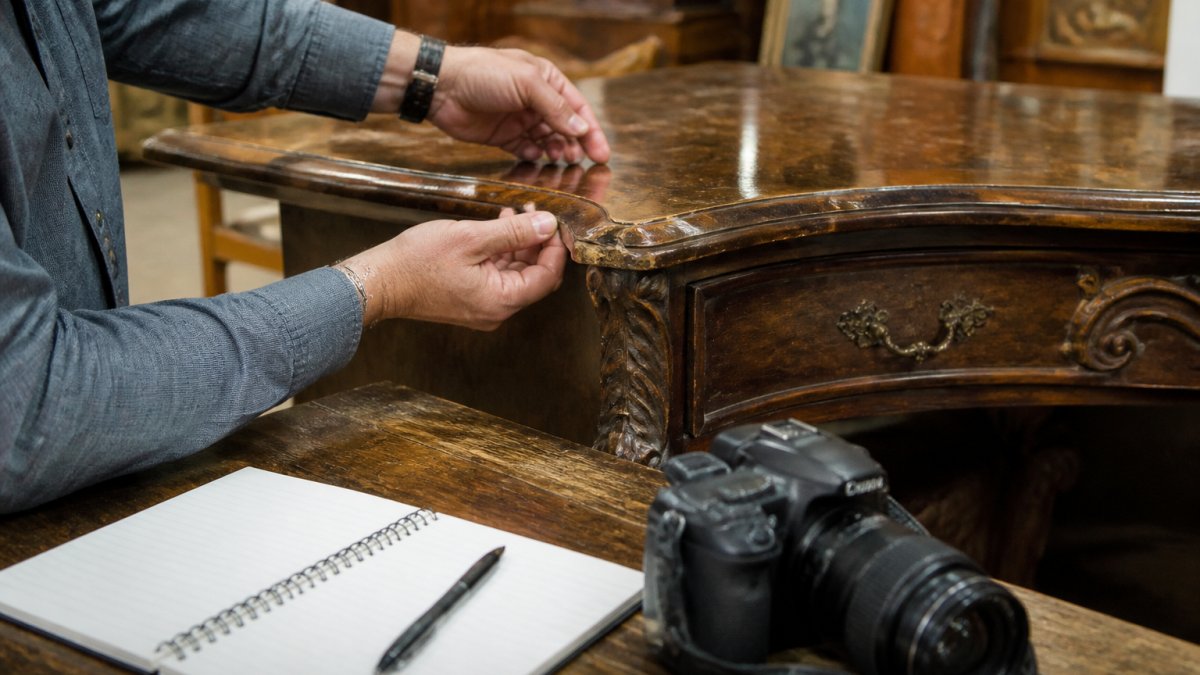
Step 1: Inspect immediately upon delivery (within 24 hours) Examine the piece for shipping damage, broken components, cracks, or dents not present in product photos. Do not attempt repairs; document everything as-is.
Step 4: Request a damage claim form Most retailers have a formal process involving a form, additional photos, and sometimes a professional assessment.
Step 5: Await the retailer's decision The retailer determines whether the damage is their responsibility (shipping/handling error) or pre-existing (yours), typically within 5-10 business days.
Step 6: Resolve the claim Resolution might be a refund, replacement, partial refund, or store credit, depending on the retailer's policy and the damage severity.
Normal wear versus shipping damage
The line between normal wear and shipping damage can be contentious; understanding the difference tells you whether you have a valid claim.
Normal wear (not covered by damage claims):
- Surface scratches consistent with age and use
- Patina or color variation across the piece
- Slight fading or discoloration from historical exposure to light
- Minor dust or dirt that cleans off
- Small dents or dings that do not affect structural integrity
- Loose joints that are typical for pieces over 100 years old (unless advertised as "restored")
Shipping damage (typically covered):
- New cracks or splits in wood
- Broken legs, arms, or structural components
- Shattered glass or mirrors
- Crushed veneer or inlay
- Damage that was not visible in product photos
- Damage that makes the piece unsafe or non-functional
The key test: does the damage match the product photos?
A 200-year-old table will have scratches and a Victorian chair will show wear; authentic antique retailers expect buyers to understand this. But retailers also have a duty not to misrepresent condition.
Misrepresentation in Photos and Descriptions
Common misrepresentation scenarios:
- Photos show minimal wear; piece arrives heavily worn or stained
- Description claims "excellent condition"; piece has significant damage not visible in photos
- Authenticity claim proves false (e.g., piece sold as 18th-century turns out to be 20th-century reproduction)
- Missing components not disclosed (e.g., a chair sold as a pair arrives as a single; a desk lacks original hardware)
- Restoration or repairs not mentioned (e.g., piece was heavily refinished but sold as original)
- Material misidentified (e.g., sold as solid wood but is veneer over particle board)
To build a strong misrepresentation claim, compare the product photos directly to what you received; if they're unclear, request high-resolution images before purchase.
Documentation matters: screenshot the listing as it appeared at purchase, save the description, and photograph the piece you received.
We provide detailed descriptions and high-quality photos specifically to prevent these disputes. We encourage buyers to ask questions before purchasing if anything is unclear.
Antique Furniture Return Shipping: Who Pays and How
Return shipping costs matter in antique furniture returns.
Who typically pays for return shipping:
- Shipping damage or retailer error: Retailer pays for return shipping and replacement or refund
- Misrepresentation: Retailer pays for return shipping and issues refund or replacement
- Buyer's remorse or change of mind: Buyer pays for return shipping (if return is allowed at all)
- Damage discovered by buyer after receipt (not shipping damage): Buyer typically pays for return shipping
For large pieces like dining tables or dressers, return shipping can cost $200-$500 or more, so buyers must be confident in their purchase.
Logistics of returning antique furniture:
Large antique pieces require specialized shipping, and most retailers won't accept returns via standard parcel carriers. You'll typically need to:
- Contact the retailer for a return authorization
- Arrange a freight carrier pickup
- Ensure proper packing and crating
- Ship the piece back
The retailer may provide a label or reimbursement once the return is approved, or require you to handle logistics yourself.
For smaller pieces (chairs, lamps, decorative items), standard parcel shipping may be acceptable.
Understanding the Antique Furniture Refund Policy: Refunds vs. Store Credit
Replacement: The retailer sends you a different piece of similar value.
Store credit: You receive a credit equal to your purchase price, valid only at that retailer.
Many retailers prefer store credit because it encourages repeat business, and some offer a slight bonus (e.g., 10% extra credit).
Check the retailer's refund policy before purchasing.
We handle refunds and returns on a case-by-case basis.
How to Evaluate a Return Policy Before You Buy
Before purchasing antique furniture, evaluate the retailer's return policy. This simple step prevents buyer's remorse and protects you if something goes wrong.
Checklist for evaluating an antique furniture return policy:
- Is there a return window? (If "all sales final," understand what that means specifically)
- How many business days do you have to report damage or misrepresentation?
- What condition must the item be in to qualify for a return? (Original packaging? Unused?)
- Does the policy cover shipping damage, misrepresentation, and authenticity disputes?
- Who pays for return shipping? (Retailer or buyer?)
- What proof of purchase is required? (Do you have it?)
- Are refunds offered, or only store credit or exchanges?
- Is there a restocking fee or deduction from the refund?
- Can you contact the retailer before purchase to ask questions?
- Does the retailer have a physical showroom where you can inspect pieces in person?
Red flags in return policies:
- Extremely short return windows (fewer than 7 business days)
- No coverage for shipping damage
- Buyer always pays return shipping, even for retailer error
- No process for damage claims or misrepresentation
- Vague or unclear language that avoids specific commitments
- Retailer difficult to reach or unresponsive to pre-purchase questions
- No physical location or showroom; online-only with no verification
Green flags in return policies:
- Clear, specific language about what is and is not covered
- Reasonable return window (14-30 business days)
- Retailer covers return shipping for their errors
- Straightforward damage claim process with documented steps
- Responsive customer service willing to answer pre-purchase questions
- Physical showroom or option to inspect pieces in person
- Transparent about restoration, repairs, or condition issues
The strongest protection is buying from a retailer you trust. We maintain a physical showroom in Austin where you can examine pieces in person before committing to a purchase.
Buying antique furniture involves inherent risks that mass-market furniture doesn't. Each piece is unique, with its own history and condition.
Frequently Asked Questions
Are antique furniture sales usually final?
Many antique retailers operate on an all sales final basis, especially for in-person purchases or auction sales. However, this varies by seller and purchase method. Online purchases often have more flexible return policies than in-store or auction transactions. Always check the specific antique furniture return policy before completing your purchase, as some sellers offer case-by-case returns for damage or misrepresentation while others do not.
What should I do if my antique furniture arrived damaged?
Document the damage immediately with clear photos showing the affected areas from multiple angles. Contact the seller within their stated return window with your proof of purchase and photos. Provide a detailed description of the damage and when you discovered it. Most retailers distinguish between shipping damage (seller's responsibility) and normal wear that developed during transit. Keep all packaging materials and the original condition documentation until the claim is resolved.
Who typically pays for antique furniture return shipping?
Return shipping costs depend on the reason for return and the seller's policy. If the item arrived damaged or was misrepresented, the seller usually covers return shipping. If you're returning an item due to change of mind and the retailer allows returns, you may be responsible for shipping costs. Large antique furniture pieces can have substantial return shipping expenses, so clarify this before purchasing. Some sellers offer store credit instead of refunds to avoid return logistics costs.
How long do I have to request a return on antique furniture?
Return windows typically range from 7 to 30 business days from the date of receipt or purchase date, depending on the retailer. Some antique stores have shorter windows than mainstream retailers because of the unique nature of antique merchandise. Damage claims may have different timelines than general returns. Always verify the specific return window in the seller's policy before buying, as antique furniture policies are often stricter than standard retail merchandise policies.