


7 Best Sustainable Furniture Materials for 2026
Last Updated: October 23, 2026
Quick Summary
The best sustainable furniture materials for 2026 include reclaimed wood, FSC-certified wood, bamboo, cork, natural upholstery fabrics, recycled plastic, and steel or aluminum. These sustainable furniture materials offer varying lifespans and environmental benefits, with reclaimed wood and metals providing the longest durability and lowest long-term environmental impact.
- Reclaimed wood from old-growth timber lasts centuries and resists warping better than modern lumber.
- FSC-certified wood proves responsible sourcing, but construction quality determines actual furniture lifespan.
- Natural upholstery fabrics like organic cotton, linen, and wool require certifications like GOTS to verify sustainability claims.
- Steel and aluminum are infinitely recyclable and can last 50+ years with minimal maintenance.
- The average mass-produced furniture ends up in landfills within 7-10 years, while sustainably-crafted pieces routinely outlast their owners.
Table of Contents
- Why Sustainable Furniture Materials Matter in 2026
- 1. Reclaimed Wood Furniture: Durability Meets History
- 2. Sustainable Wood for Furniture: FSC-Certified Options
- 3. Bamboo Furniture Sustainability: Fast-Growing and Renewable
- 4. Cork: A Lightweight, Low-Impact Natural Material
- 5. Organic Upholstery and Natural Upholstery Fabrics
- 6. Recycled Plastic and High-Density Polyethylene (HDPE)
- 7. Steel and Aluminum: Durable, Infinitely Recyclable Metals
- Material Comparison Table: Trade-Offs in Performance and Sustainability
- Why Sustainable Furniture Materials Matter in 2026
- Frequently Asked Questions
Why Sustainable Furniture Materials Matter in 2026
Choosing sustainable furniture materials for 2026 isn't just about aesthetics anymore, it's about making a decision that affects your home's longevity, your environmental footprint, and your long-term investment value.
The shift toward sustainable furniture materials reflects a fundamental change in how discerning homeowners approach their spaces. Unlike fast furniture, designed to be replaced every few years, pieces made from responsible materials hold their value, resist degradation, and often become more beautiful with age.
What makes a material truly sustainable goes beyond the marketing label. It involves understanding where it comes from, how long it lasts, whether it can be repaired or repurposed, and what happens when its useful life ends.
This guide explores seven of the best sustainable furniture materials for 2026, breaking down what makes each one worth considering, where they excel, and where they fall short.
1. Reclaimed Wood Furniture: Durability Meets History
Reclaimed wood represents one of the most compelling sustainable furniture materials available today. Unlike newly harvested timber, reclaimed wood comes from existing structures, old barns, warehouses, factories, and deconstructed buildings, giving it a second life while eliminating the environmental cost of new forestry.
The durability advantage is substantial. Reclaimed wood typically comes from old-growth timber, which has tighter grain structure and greater density than modern fast-growth lumber. This density translates to furniture that resists warping, splitting, and everyday wear far better than contemporary pieces.
Beyond performance, reclaimed wood carries character. The patina, nail holes, and color variation tell a story, marks of the material's previous life that add authenticity and warmth that new wood simply cannot replicate. Architectural Digest's guide to reclaimed materials highlights how these pieces become focal points in design-conscious homes, often appreciating in value over time.
The practical consideration: reclaimed wood costs more upfront than conventional lumber. Old Europe Antique Home Furnishings specializes in authentic reclaimed and antique wood pieces like our Antique Dining Table, Italian Renaissance Revival, Walnut, U. Brichetto Genoa, which exemplifies how solid walnut construction from the early 1900s creates furniture that endures.

2. Sustainable Wood for Furniture: FSC-Certified Options
Not all new wood is created equal. FSC-certified (Forest Stewardship Council) wood represents responsibly managed forestry where new trees are planted to replace harvested ones, ecosystems are protected, and workers are treated fairly.
FSC-certified wood works well for contemporary furniture designs where you want new construction without the environmental guilt.
The key distinction: FSC certification proves sustainable sourcing, but it doesn't guarantee the furniture itself will last. A well-made FSC-certified table will outlast a poorly constructed one made from reclaimed wood.
Many sustainable furniture makers now combine FSC-certified wood with traditional joinery techniques, mortise and tenon joints, hand-finished surfaces, rather than modern shortcuts like dowels or pocket holes.
For those seeking authentic historical pieces made from sustainably-sourced wood, explore How to Care for 18th Century Wood Furniture.
3. Bamboo Furniture Sustainability: Fast-Growing and Renewable
Bamboo grows faster than any tree species on earth, some varieties mature in 3-5 years compared to 20-40 years for conventional timber. This rapid renewal cycle makes bamboo one of the most renewable resources available for furniture production, and it requires no replanting; the root system regenerates after harvesting.
The material itself is surprisingly strong. Bamboo's tensile strength exceeds steel in some applications, and its flexibility resists cracking. Engineered bamboo, laminated and pressed for stability, creates furniture that handles moisture and temperature fluctuations better than solid wood in certain conditions.
The sustainability catch: most bamboo furniture involves significant processing. Raw bamboo is treated with adhesives, dyes, and finishes that may contain formaldehyde or other chemicals. The environmental benefit of fast-growing material can be offset by energy-intensive manufacturing and chemical use.
Look for bamboo furniture made with low-VOC (volatile organic compound) finishes and adhesives, and verify that the source plantation didn't displace natural ecosystems. Solid bamboo construction performs better than engineered bamboo for long-term durability, though neither matches the lifespan of quality hardwood furniture.
4. Cork: A Lightweight, Low-Impact Natural Material
Cork comes from the bark of cork oak trees, a harvest that doesn't kill the tree. The bark regenerates, allowing repeated harvesting every 9-12 years over the tree's 200+ year lifespan.
The material offers unique properties: naturally antimicrobial, hypoallergenic, fire-resistant, and insulating.
Antique Chairs, Set of Twelve, Wagon Wheel Back, Oak, Arm and Side, C. 1920's! →
Cork's real advantage emerges in mixed-material applications. Cork tops on wooden frames, cork-wrapped steel legs, cork panels on upholstered pieces, these combinations use cork's aesthetic warmth and tactile appeal without relying on it for structural support.
The limitation: cork is softer than wood and can dent or compress under heavy weight. It's not suitable for dining tables or high-traffic seating. But for occasional furniture, decorative pieces, or accent elements, cork delivers sustainability without compromise.
5. Organic Upholstery and Natural Upholstery Fabrics
The upholstery on your furniture matters as much as the frame. Conventional upholstery fabrics often contain synthetic fibers (polyester, acrylic), chemical dyes, and flame retardants that persist in the environment long after the furniture is discarded.
Natural upholstery fabrics, organic cotton, linen, hemp, wool, offer alternatives. Organic cotton is grown without synthetic pesticides, reducing chemical runoff and soil contamination. Linen comes from flax plants that require minimal water and pesticide use.
Wool, when sourced from responsibly managed herds, provides natural fire resistance without chemical treatments, durability that rivals synthetics, and a lifecycle that ends in biodegradation rather than landfill persistence.
The tradeoff: natural fabrics typically cost more than synthetics and may require more careful maintenance. Organic cotton can stain more easily than treated synthetics.
Authentic antique furniture often features natural upholstery materials, horsehair, cotton ticking, wool, because synthetics didn't exist. Pieces like our Antique Chairs, Side, Set of 6, French Louis XV Style, Caned, Walnut showcase how natural materials age gracefully.

6. Recycled Plastic and High-Density Polyethylene (HDPE)
Recycled plastic furniture sounds contradictory to sustainability, but it serves a specific purpose: diverting waste from landfills while creating durable outdoor pieces. High-density polyethylene (HDPE) made from recycled plastic bottles and containers resists weathering, requires no finishing, and lasts 20+ years in outdoor conditions.
HDPE doesn't rot, splinter, or require staining like wood. It won't attract insects or develop mold. For outdoor furniture, this material outperforms wood on durability and maintenance.
The limitation: recycled plastic furniture is not suitable for indoor spaces where you want warmth and natural aesthetics. It's also not infinitely recyclable; after multiple use cycles, the material degrades. But for a 20-year lifespan in outdoor conditions without maintenance, recycled HDPE delivers genuine value.
7. Steel and Aluminum: Durable, Infinitely Recyclable Metals
Steel and aluminum represent the pinnacle of material circularity.
Steel furniture offers exceptional durability and strength-to-weight ratio. It resists damage, handles heavy use, and develops character through patina and wear. Industrial-style steel furniture has become a design staple precisely because the material performs so well and ages beautifully.
Aluminum is lighter than steel, corrosion-resistant, and equally recyclable. It's ideal for outdoor furniture and contemporary designs where weight matters. Both metals pair well with wood, stone, or upholstery, creating hybrid pieces that use each material's strengths.
The environmental consideration: mining and processing metals requires energy, and virgin metal production carries a larger carbon footprint than recycled content. However, the infinite recyclability and 50+ year lifespan of well-made metal furniture offset this initial impact.
Material Comparison Table: Trade-Offs in Performance and Sustainability
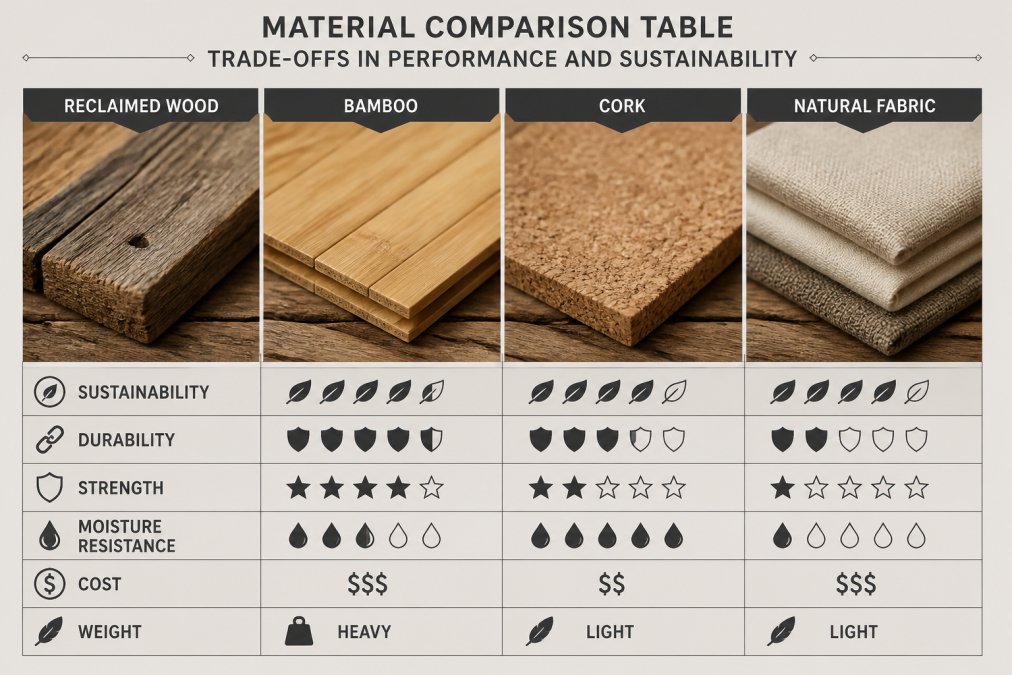
| Material | Lifespan | Repairability | Processing Impact | Best Use Case | Cost Level |
|---|---|---|---|---|---|
| Reclaimed Wood | 50+ years | Excellent | Minimal | High-quality furniture, statement pieces | High |
| FSC-Certified Wood | 30-50 years | Good | Moderate | Contemporary furniture, eco-conscious buyers | Medium-High |
| Bamboo | 15-25 years | Fair | Moderate-High | Accent furniture, eco-marketing appeal | Medium |
| Cork | 20-30 years | Good | Low | Accent pieces, decorative elements | Medium |
| Natural Upholstery | 10-20 years | Moderate | Low-Moderate | High-quality seating, conscious consumers | Medium-High |
| Recycled Plastic | 20+ years | Poor | Moderate | Outdoor furniture, functional pieces | Medium |
| Steel/Aluminum | 50+ years | Excellent | Moderate | Contemporary design, outdoor, heavy use | Medium-High |
Why Sustainable Furniture Materials Matter in 2026
The furniture you choose today shapes your home for decades. Sustainable materials aren't a trend, they're a recognition that quality, durability, and environmental responsibility align. Pieces built to last become part of your home's story, appreciate in value, and eliminate the waste cycle of replacement furniture.
Old Europe Antique Home Furnishings demonstrates this principle through our curated collection of authentic European antiques. When you buy 17th century European wood furniture, you're investing in pieces whose durability is no longer theoretical.
The most sustainable furniture is the piece you already own, maintained well. The second most sustainable is the piece built to last your lifetime and beyond. Start there, and you'll find that sustainable materials aren't a compromise, they're the foundation of truly beautiful, timeless homes.
Ready to explore furniture that combines sustainability with authentic historical craftsmanship? At Old Europe Antique Home Furnishings, we specialize in authentic European antiques built from reclaimed wood, solid walnut, and other natural materials that have proven their durability across centuries. NRDC's guide to sustainable home furnishings recommends prioritizing longevity and quality, exactly what antique pieces deliver.
Frequently Asked Questions
What makes a sustainable furniture material actually sustainable?
True sustainability in furniture materials depends on three factors: renewable sourcing (the material regrows or can be recycled), durability (it lasts decades, not years), and low embodied carbon (minimal processing and transport). Reclaimed wood and FSC-certified solid wood excel here because they combine long lifespan with responsible forestry. Bamboo grows in 3-5 years versus 20+ years for trees, making it fast-renewing. Avoid materials marketed as 'eco-friendly' without third-party certification, many contain toxic finishes or adhesives that offset environmental gains.
Is reclaimed wood furniture more sustainable than new sustainable wood?
Yes, reclaimed wood furniture is typically more sustainable than newly harvested certified wood. It requires zero new tree cutting, no replanting investment, and minimal processing. The embodied carbon is already 'spent', the environmental cost occurred decades ago. Reclaimed wood also lasts indefinitely with proper care. New FSC-certified wood is still a responsible choice if sourced from well-managed forests, but reclaimed always wins on total environmental impact. Antique pieces like those from Old Europe Antique Home Furnishings are historically verified and built to outlast modern furniture by centuries.
Can bamboo furniture sustainability claims be trusted?
Bamboo is genuinely fast-renewing, it matures in 3-5 years without replanting, but verify certifications. Look for FSC or OEKO-TEX labels, which confirm responsible harvesting and non-toxic finishes. Avoid 'bamboo fabric' (viscose rayon) unless certified, as the chemical processing can be toxic. Solid bamboo furniture performs well for indoor use but is less durable than hardwoods in high-moisture or high-traffic settings. For maximum durability, combine bamboo with other materials: bamboo legs with a reclaimed wood top, for example.
What certifications should I look for when buying sustainable furniture?
The most reliable certifications are FSC (Forest Stewardship Council) for wood, GOTS (Global Organic Textile Standard) for fabrics, and OEKO-TEX for finishes and dyes. Cradle to Cradle certification covers the entire product lifecycle. Avoid vague claims like 'eco-friendly' or 'green' without a named certifier. For antique furniture, ask for provenance documentation, Old Europe Antique Home Furnishings provides documentation that verifies authenticity and age, which itself proves sustainability through proven longevity.
