


Buy 17th Century European Wood Furniture: 10 Authentic Pieces
Table of Contents
- What Makes 17th Century European Wood Furniture Worth Buying
- 17th-Century European Furniture Styles and Regional Characteristics
- How to Identify Antique Furniture: Construction, Materials, and Age Markers
- Understanding Antique Furniture Provenance and Documentation
-
10 Authentic 17th-Century European Antique Furniture Pieces for Sale
- 1. Spanish Painted Leather and Carved Wood Chest (17th-18th Century)
- 2. Early English Carved Oak Settle with Rosette and Leaf Detail
- 3. Early Elizabethan Carved Oak Court Cupboard
- 4. Continental Renaissance Walnut Cabinet (18th Century)
- 5. Italian Baroque Bambochi Style Walnut Cabinet
- 6. Italian Walnut Trestle Library Table with Carved Border
- 7. Spanish Baroque Leather-Clad Trunk with Nailhead Trim
- 8. English Georgian Oak Chest-on-Chest with Eight Drawers
- 9. French Provincial Louis XIII Carved Cabinet
- 10. Italian Renaissance Revival Walnut Hall Bench with Dragon Carvings
- Price Context and Value Factors for Antique European Furniture
- How to Buy Safely Online and Avoid Reproduction Furniture
- Frequently Asked Questions
Last Updated: October 12, 2026
What Makes 17th Century European Wood Furniture Worth Buying
Authentic 17th century European wood furniture is an investment in craftsmanship modern mass production cannot replicate.
Each piece tells a story through construction, wood selection, and regional influences. A carved oak settle from England differs fundamentally from a Spanish leather-clad chest, not just in appearance but in cultural and historical context.

At Old Europe Antique Home Furnishings, we provide collectors and enthusiasts with high-quality, historical pieces dating back to the 16th century.
17th-Century European Furniture Styles and Regional Characteristics
Different regions developed distinct approaches to furniture design during the 17th and 18th centuries, shaped by available materials, cultural preferences, and trade influences.
English furniture emphasized carved oak with geometric patterns, rosette motifs, and turned legs.

Spanish and Portuguese furniture incorporated leather-clad construction with nailhead trim and iron hardware.
Italian furniture embraced Renaissance and Baroque influences, favoring walnut with elaborate carved details.
French Provincial pieces reflected Louis XIII styling, with raised panel doors, carved wood detailing, and substantial proportions.
How to Identify Antique Furniture: Construction, Materials, and Age Markers
Wood aging and patina tell a reliable story.
Wood species matter significantly. Period craftsmen used oak, walnut, and occasionally elm. English furniture typically features solid oak; Italian and Continental pieces favor walnut.
Hardware and fittings provide dating clues.
Construction inconsistencies are actually authentic markers. Skilled craftsmen made individual choices, so panels might not align perfectly or carvings might vary in depth.
Understanding Antique Furniture Provenance and Documentation
Provenance, the documented history of ownership and location, significantly impacts both the value and authenticity of 17th century european wood furniture.
Provenance documentation typically includes auction house records, previous owner information, exhibition history, and expert authentication.
Documentation standards vary. The strongest documentation includes photographs of construction details, wood species identification, and written analysis of period characteristics.
Regional records and historical research can sometimes verify provenance.
Condition reports should accompany provenance information.
10 Authentic 17th-Century European Antique Furniture Pieces for Sale
Our curated selection represents genuine 17th and 18th-century European craftsmanship.
1. Spanish Painted Leather and Carved Wood Chest (17th-18th Century)
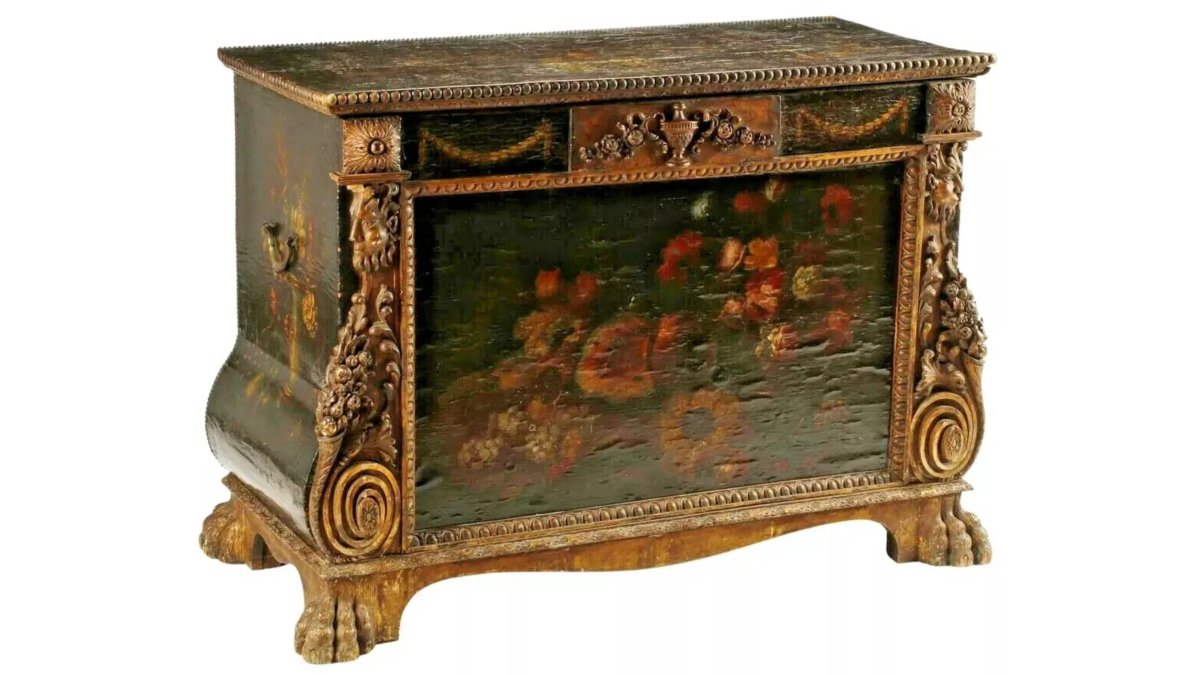
This piece exemplifies Spanish Baroque craftsmanship. Measuring approximately 42 inches high, 56.5 inches wide, and 28 inches deep, the chest features a richly painted floral theme on leather with intricate wood carvings and a concealed lock mechanism beneath the fall front panel.
Why it matters: Spanish leather-clad trunks represent a distinct tradition rarely found in other European regions. This chest, priced at $8,319.89, shows authentic wear consistent with centuries of use, including a worn interior liner and period-appropriate restorations.
Best for: Collectors seeking statement pieces that blend storage functionality with authentic historical artistry.
2. Early English Carved Oak Settle with Rosette and Leaf Detail
English oak settles represent some of the most recognizable 17th-century furniture forms.
The dark wood tones and intricate rosette carvings showcase craftsmanship typical of English furniture from the 1600s and 1700s. The hand-turned legs and visible construction joints confirm period authenticity.
Best for: Those seeking functional antique seating that works in dining rooms, entryways, or period-inspired interiors. The carved details and substantial construction make it both beautiful and durable for actual use.
3. Early Elizabethan Carved Oak Court Cupboard
This 17th-century English court cupboard embodies the formal display furniture wealthy households used to showcase status and craftsmanship.
The raised panel door style and intricate carvings exemplify early Elizabethan design principles.
Best for: Serious collectors and interior designers seeking statement pieces that anchor dining rooms or parlors. The historical significance and craftsmanship quality justify the investment for those prioritizing authenticity and provenance.
4. Continental Renaissance Walnut Cabinet (18th Century)
This 18th-century cabinet demonstrates Continental Renaissance styling with carved wood details and dark wood tone finish.
The Continental Renaissance style blended influences from multiple regions, Italian, German, and Low Countries traditions merged into a distinctive hybrid aesthetic.
Best for: Collectors seeking substantial storage solutions that function as architectural elements in period interiors. The size and style work well in libraries, dining rooms, or formal living spaces.
5. Italian Baroque Bambochi Style Walnut Cabinet
This Italian Baroque cabinet features the distinctive Bambochi design, walnut wood with intricate carvings in the Baroque style, manufactured in Italy during the late 18th or early 19th century.
Bambochi style cabinets incorporated mythological and figural elements, reflecting the grandeur of Baroque aesthetics. The carved walnut construction demonstrates Italian makers' commitment to sculptural form combined with functional storage. At $7,437.89, this cabinet is a rare find and would make a great addition to any collection.
Chest, Antique, Spanish Painted, Leather & Wood Chest, 17th C., 1600s / 1700s! →
6. Italian Walnut Trestle Library Table with Carved Border
This Italian walnut library table exemplifies functional elegance from the 18th or 19th century.
The trestle base construction and carved border detail showcase Italian craftsmanship focused on both form and function.
Best for: Home office spaces, libraries, or dining rooms where a substantial work surface combines with historical authenticity. The size and construction quality support actual use, not merely display.
7. Spanish Baroque Leather-Clad Trunk with Nailhead Trim
This 18th-century Spanish Baroque trunk exemplifies the dowry chest tradition, the caja de novia that Spanish families commissioned for significant life transitions.
The construction combines leather covering, wood framework, iron hardware, and decorative nailhead elements, a sophisticated integration of materials and craftsmanship.
Best for: Collectors seeking authentic Spanish furniture with documented historical use and family significance. The trunk functions as bedroom storage or entry hall display while telling a story about Spanish cultural traditions.
8. English Georgian Oak Chest-on-Chest with Eight Drawers
This late 18th or early 19th-century English Georgian piece features dark wood tone oak with a rectangular shape, cornice with dentil molding, and eight drawers.
The cornice with dentil molding and bracket feet represent Georgian design principles emphasizing proportion and restraint.
Best for: Bedroom storage that combines functionality with historical authenticity. The substantial height and drawer capacity make it practical for modern use while maintaining period aesthetic.
9. French Provincial Louis XIII Carved Cabinet
This 18th-century French Provincial cabinet embodies Louis XIII styling with raised panel doors and carved wood detailing.
French Provincial furniture emphasized regional craftsmanship while incorporating royal design principles. The substantial height and carved details suggest this cabinet displayed valuable items while providing concealed storage.
Best for: Collectors seeking French furniture that anchors dining rooms, libraries, or formal living spaces. The height and proportions create visual impact while providing substantial storage capacity.
10. Italian Renaissance Revival Walnut Hall Bench with Dragon Carvings
This late 19th-century Italian Renaissance Revival walnut hall bench represents 19th-century craftsmen's fascination with Renaissance forms and aesthetic principles.
The bold beast-form arms and paw feet add sculptural presence, while the molded cornice includes incised foliate decoration. The hinged seat provides interior storage, typical of hall or entry benches.
Best for: Collectors prioritizing sculptural presence and dramatic design. The piece works as a statement entry hall element or bedroom storage with artistic distinction.
Price Context and Value Factors for Antique European Furniture
When you buy 17th century european wood furniture, pricing reflects multiple factors beyond simple age or size.
Regional origin influences pricing. Spanish leather-clad pieces, Italian Baroque cabinets, and French Provincial furniture occupy different market segments.
Condition and restoration history affect value substantially.
Provenance documentation directly impacts pricing.
Size and functionality matter for practical collectors.
Market demand for specific styles fluctuates. English carved oak furniture maintains steady demand, while certain Continental styles experience periodic popularity shifts.

The pieces we offer at Old Europe Antique Home Furnishings range from $2,103.75 to $8,319.89.
How to Buy Safely Online and Avoid Reproduction Furniture
Understand return policies and guarantees. Reputable dealers offer return periods allowing inspection upon arrival.
Examine photographs critically. Multiple high-resolution images showing different angles, details, and construction elements indicate professional presentation.
Verify shipping and handling protocols. Authentic antique furniture requires professional packing and careful shipping to prevent damage.
When you buy 17th century european wood furniture from Old Europe Antique Home Furnishings, you gain access to historical and unique home furnishings. Our team can discuss construction details, regional characteristics, and historical context for every piece. Contact us for specific questions about any item in our collection, we welcome detailed inquiries and provide comprehensive information to support confident purchasing decisions.
Buying authentic 17th century european wood furniture requires understanding construction methods, regional styles, and authentication standards.
Frequently Asked Questions
How can I tell whether a piece of 17th-century furniture is authentic?
Authentic 17th-century European wood furniture shows specific age markers: hand-tool marks on the underside and interior surfaces, irregular wood grain without modern uniformity, period-appropriate joinery (mortise and tenon, not screws), and natural patina with wear patterns consistent with centuries of use. Examine the back, underside, and interior, these areas reveal construction methods. Look for wood species common to the period and region: oak in England, and walnut in Italy and France. Reproductions often have too-perfect surfaces, modern fasteners, or wood that appears artificially aged. Consult a specialist if authenticity is critical to your purchase.
What types of wood were used in 17th-century European furniture?
17th-century European craftsmen selected wood based on regional availability and intended use. Oak dominated English and Continental furniture, prized for strength and durability. Walnut became fashionable in Italy, France, and Spain during this period, offering rich color and carving capability. Spanish furniture often combined wood with leather and iron hardware. Mahogany was rare until the 18th century. Solid wood construction was standard; veneering existed but was less common than in later periods. The wood species and construction method together help establish origin and authenticity.
What is the difference between 17th- and 18th-century European furniture?
17th-century pieces emphasize structural solidity and hand-carved ornament, with heavier proportions, darker finishes, and Gothic or Renaissance Revival influences. Joinery is visible and forms part of the design. 18th-century furniture becomes more refined: lighter proportions, elaborate veneering, curved forms, and regional styles like Louis XV or Georgian become distinct. Hardware shifts from heavy iron to brass. Carving becomes more delicate. The transition reflects changing tastes and improved tools. A piece from the 1600s typically has a more austere, architectural presence, while 1700s pieces display greater elegance and decorative detail. Dating requires close examination of style elements, construction, and wood species together.
How can I check the provenance of antique furniture?
Provenance documentation strengthens confidence in authenticity and value. Request written records from the seller detailing where the piece came from, previous ownership, and any restoration work. Look for maker's marks, labels, or signatures inside drawers or on the back. Museum records or exhibition history provide strong evidence. However, many authentic 17th-century pieces lack formal documentation because they predate modern record-keeping. In those cases, construction details, wood species, style analysis, and condition assessment become the primary authentication tools. A reputable antique dealer should be transparent about what is known and unknown about a piece's history.
Where can I buy authentic 17th-century European wood furniture online safely?
Purchase from established antique dealers with verifiable expertise and transparent return policies. Reputable sellers provide detailed photographs of construction details, underside, and wear patterns, not just the front. They describe condition honestly, including restorations or repairs. Request additional images before committing. Ask specific questions about wood species, joinery, age markers, and provenance. Avoid sellers using vague descriptions like 'antique-style' or 'vintage-inspired.' Legitimate dealers stand behind authenticity claims and offer reasonable return windows for pieces purchased sight-unseen. Shipping costs for large pieces are significant, so confirm delivery arrangements and insurance in advance.