


Rare European Antiques for Serious Collectors!!
Old Europe Antique Home Furnishings
Table of Contents
- What Makes Rare European Antiques Worth Collecting
- How to Authenticate Antique Furniture and Verify Authenticity
- Understanding European Antique Provenance and Documentation
- Notable Categories: Furniture, Porcelain, Silver, and Decorative Objects
- Collector-Grade Condition Guide and Restoration Considerations
- Investment-Grade Pieces: Valuation, Rarity, and Valuable European Antiques
- Sourcing, Shipping, and Legal Considerations for Serious Collectors
- Frequently Asked Questions
Last Updated: October 16, 2026
What Makes Rare European Antiques Worth Collecting
Rare European antiques for serious collectors are tangible connections to centuries of craftsmanship, historical events, and cultural evolution. An 18th-century Georgian piece tells its story through materials, construction methods, and design choices that mass-produced furniture cannot match.
The distinction between common antiques and truly rare finds hinges on authenticity, provenance, condition, rarity, and market demand. A genuine 1700s English oak chest-on-chest demonstrates the joinery, wood selection, and design principles of its era, and its wear patterns, repairs, and modifications serve as historical documentation.

At Old Europe Antique Home Furnishings, we source pieces that meet serious collector standards, each selected for authenticity, condition, and investment potential. Our collectors understand that rarity drives value only when backed by verifiable provenance and honest condition assessment.
The appeal extends beyond aesthetics: rare European antiques often appreciate over time, particularly pieces from recognized periods like Art Deco, Georgian, or Aubusson. Unlike new furniture that depreciates immediately, a documented 18th-century tapestry or hand-carved oak settle gains value as supply diminishes and collectors compete for remaining examples.
How to Authenticate Antique Furniture and Verify Authenticity
Authentication separates genuine antique furniture from high-quality reproductions, requiring examination of construction methods, materials, wear patterns, and documentation, not just visual inspection.
Start with construction techniques. Authentic 18th-century furniture shows hand-cut joinery, mortise-and-tenon joints, and period-consistent wood grain; machine-cut marks, uniform nail spacing, or perfectly consistent staining suggest reproduction. Run your hand along interior surfaces and joints, where genuine age leaves texture and patina that modern aging techniques struggle to replicate.
Wood selection and aging patterns matter significantly. Antique pieces used locally available woods: English oak for British furniture, Italian walnut for Renaissance pieces, mahogany for Georgian pieces. The wood should show color variation, subtle checking, and uneven patina, while reproductions often use uniform staining to fake age. Examine back panels, undersides, and interiors where makers didn't invest finishing effort; these areas reveal authentic aging.
Look for evidence of repair and use. Genuine antiques show wear appropriate to age and function: a 1700s settle should display seat wear, perhaps replaced upholstery tacks or reinforced joints. Suspiciously pristine condition on a 300-year-old piece raises questions, and damage should match the piece's history rather than random gouges.
Documentation and provenance provide the strongest authentication. Auction catalogs, estate records, exhibition histories, and prior ownership documentation establish a chain of custody, and pieces from important estates carry provenance that serious collectors verify before purchasing. We maintain detailed records for every piece.
Understanding European Antique Provenance and Documentation
Provenance is the documented history of ownership and location, transforming a beautiful object into a historically significant artifact for serious collectors.
Strong provenance includes: prior ownership records, auction house documentation, exhibition histories, published references, and estate records. A piece documented in a major auction catalog (Christie's, Sotheby's) carries more weight than a piece with no recorded history. Published references in academic works, museum catalogs, or period-specific guides add scholarly credibility.
The best provenance chains show continuous ownership: a piece documented from 1850 to present day demonstrates it survived, was valued enough to keep, and wasn't stolen or lost. Gaps don't necessarily indicate problems, since many antiques changed hands privately, but unbroken chains command premium prices.
Certificates of authenticity from recognized dealers or appraisers add value, particularly when the appraiser has expertise in the specific period and style. Serious collectors verify credentials and cross-reference appraisers with professional organizations.
For investment-grade pieces, obtain written documentation covering maker or period attribution, estimated date of manufacture, materials, dimensions, condition notes, repairs or modifications, and prior exhibition or publication history.
The American Society of Appraisers provides guidance on professional appraisal standards for antiques. Their certified members follow strict protocols for documenting authenticity and condition.
Notable Categories: Furniture, Porcelain, Silver, and Decorative Objects
European antiques span distinct categories, each with its own authentication standards, rarity factors, and collector demand.
Furniture represents the largest category for serious collectors. English Georgian, French Louis XVI, Italian Renaissance revival, and Spanish Baroque pieces each command distinct price ranges.
French antique furniture emphasizes ornate carving and marquetry, while Italian walnut pieces showcase regional craftsmanship; our Italian walnut trestle library table ($2,906.98) features carved egg-and-dart borders and 18th-century Italian joinery.
Porcelain and ceramics attract collectors focused on decorative objects.
Silver and metalwork range from serving pieces to decorative objects. Hallmarks and maker's marks authenticate silver, and serious collectors verify marks against published references. Continental silver, English sterling, and gilt bronze objects each command different valuations based on maker, period, and condition.
Decorative objects, maps, tapestries, clocks, books, round out serious collections. An 18th-century Aubusson tapestry depicting scenes from Fontaine's Fables ($14,424.00) serves both aesthetic and investment functions. Antique maps, like our 1765 hand-colored map of Sweden and Norway ($945.00), appeal to collectors of cartography and regional history.

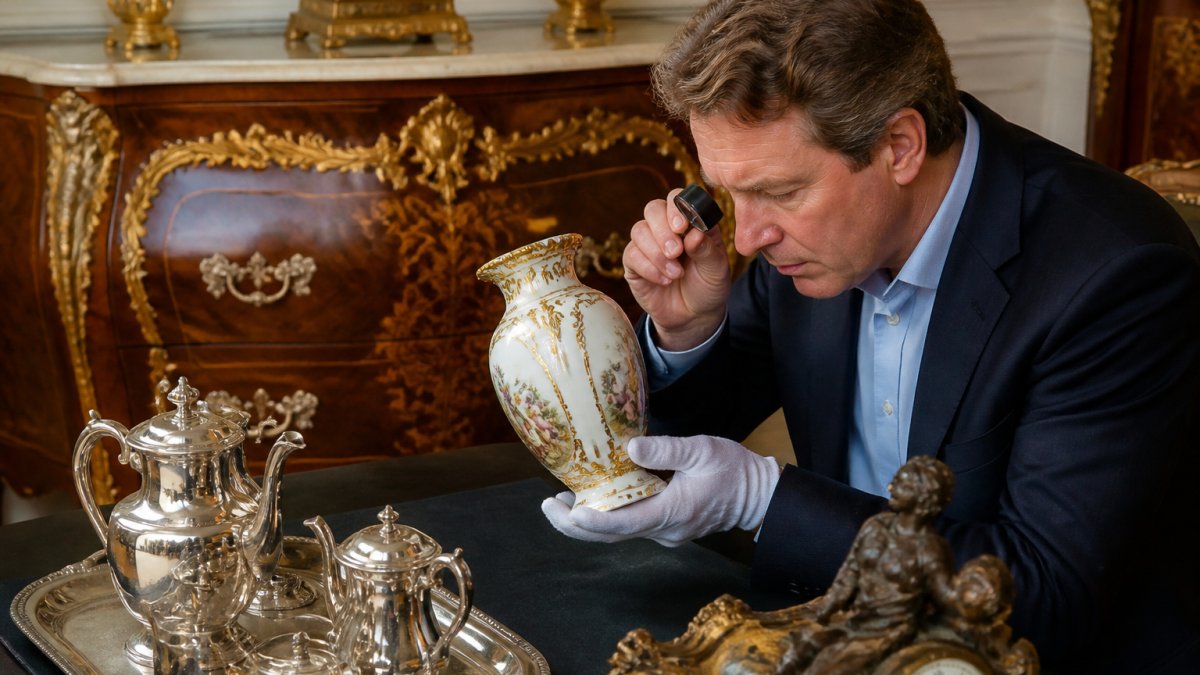
Rarity within each category determines collector demand: a common Victorian chair holds modest value, while a rare signed example by a recognized maker or unique regional variant commands significantly more. Across all categories, scarcity combined with documented authenticity and collector demand drives investment potential.
Collector-Grade Condition Guide and Restoration Considerations
Condition assessment separates investment-grade pieces from display-only antiques, directly impacting value and marketability.
Excellent condition means minimal wear appropriate to age, no structural damage, original finishes where possible, and all components intact. An 18th-century oak settle in excellent condition shows seat and arm wear consistent with use, but the frame is sound, joints tight, and carvings sharp. Such pieces command top prices and appeal to the broadest collector base.
Good condition includes minor wear, possibly one small repair, and mostly intact original finish. A Georgian chest-on-chest in good condition might have wood loss on one back panel or replaced hardware, but the structure is sound and fully functional. These represent better value than excellent examples while maintaining investment potential.
Fair condition encompasses significant wear, multiple repairs, or finish loss, such as loose joints, replaced components, or substantial finish wear. These appeal to collectors focused on specific styles or makers, or those planning restoration, and value depends heavily on rarity and provenance.
Antique Map, Sweden and Norway, 18th C. ( 1700s ) 1765, Collector's Item, Rare! →
Poor condition means structural damage, missing components, or extensive repairs. These typically serve as reference examples or project pieces for experienced restorers, with minimal investment potential unless exceptionally rare.
Restoration decisions require careful consideration. Minor conservation, gentle cleaning, stabilizing loose joints, replacing worn upholstery, typically increases value. Major restoration, refinishing wood, repainting surfaces, replacing substantial components, can decrease collector value by 20-40% if it obscures original materials and patina.
Authentic aging and wear tell the piece's history: a settle showing 300 years of use carries more collector appeal than one stripped, sanded, and refinished, and original upholstery fabric, even if worn, often outweighs new upholstery in serious collections.
When restoration is necessary, work with specialists experienced in period-appropriate techniques; modern materials or methods reduce historical authenticity and future value.
Investment-Grade Pieces: Valuation, Rarity, and Valuable European Antiques
Investment-grade antiques combine documented rarity, strong provenance, collector demand, and sound condition. Understanding valuation methodology helps serious collectors identify pieces with appreciation potential.
Comparable sales analysis drives valuation. Auction results for similar pieces establish market benchmarks. A Georgian period mahogany clock with documented maker and provenance from an important estate, like our wall clock ($2,327.00), commands premium pricing based on comparable examples at major auction houses.
Rarity multiplies value. A common reproduction settee has minimal investment value. An early English carved oak settle from the 1700s ($3,272.73) with documented age and original construction techniques appeals to serious collectors willing to pay significantly more.
Maker attribution and period significance matter substantially. A piece documented to a recognized maker commands 30-50% premiums over unsigned examples of similar quality. Italian Renaissance pieces, French Louis XVI furniture, and English Georgian objects all carry established collector bases with predictable demand.
Market demand varies by category and period. Georgian and Regency furniture consistently appreciates as supply tightens. Art Deco pieces have seen renewed interest. Spanish Baroque appeals to collectors seeking dramatic statement pieces.
Documentation increases value. A piece with published exhibition history, prior ownership records, or academic references commands premiums. Our rare 1790 first-edition James Bruce Africa Voyages ($1,934.00) combines historical significance with scarcity, and documented provenance establishes its authenticity.

Antiques Appraisal and Valuation Standards provide guidance on professional valuation methodology. Serious collectors obtain formal appraisals for insurance and investment documentation.
Price ranges for investment-grade pieces typically start at $1,500 and extend into five figures for exceptional examples. Our inventory demonstrates this range: from the 1765 hand-colored map ($945.00) through the Aubusson tapestry ($14,424.00). Each piece's value reflects its rarity, condition, provenance, and collector demand.
| Category | Entry-Level Range | Mid-Level Range | Investment-Grade Range |
|---|---|---|---|
| Furniture | $800-$2,500 | $2,500-$7,500 | $7,500+ |
| Porcelain | $600-$1,500 | $1,500-$5,000 | $5,000+ |
| Maps & Prints | $500-$1,200 | $1,200-$3,000 | $3,000+ |
| Tapestries | $3,000-$8,000 | $8,000-$15,000 | $15,000+ |
| Decorative Objects | $400-$1,500 | $1,500-$4,000 | $4,000+ |
Sourcing, Shipping, and Legal Considerations for Serious Collectors
Sourcing rare European antiques requires strategy, patience, and established dealer relationships. Serious collectors employ multiple sourcing channels.
Established dealers with curated inventories provide vetted pieces with documented provenance. Old Europe Antique Home Furnishings maintains a showroom available by appointment, letting collectors inspect pieces in person before purchasing.
Auction houses offer another avenue, with major catalogs providing detailed condition reports, provenance documentation, and comparative pricing. However, auction purchases require in-person inspection or reliance on catalog descriptions, a risk for significant investments.
Estate sales and private collections occasionally yield exceptional pieces but require extensive due diligence on authenticity and condition; experienced collectors understand the authentication challenges and budget accordingly.
International sourcing expands options but introduces shipping complexity, since European dealers often hold pieces unavailable domestically. Serious collectors factor international shipping, customs documentation, and import duties into acquisition costs.
Legal considerations vary by piece type and origin. Cultural patrimony laws in some European countries restrict export of certain antiques. Pieces created before specific dates may require export permits.
U.S. Customs and Border Protection Import Regulations provide guidance on importing antiques legally. Duties and taxes apply to imported pieces; professional shippers handle documentation.
Insurance documentation protects collections. Obtain professional appraisals for valuable pieces; maintain detailed photographs and condition records. Insurance policies should specify replacement value based on current market comparables.
Collectors building serious collections benefit from relationships with reputable dealers who understand authentication, provenance, condition assessment, and market values, providing confidence that acquisitions represent sound investments.
Building a serious collection of rare European antiques demands knowledge, patience, and access to authenticated pieces with verified provenance, and the market rewards collectors who understand authentication, condition assessment, and valuation methodology.
Frequently Asked Questions
How can you tell if a European antique is authentic?
Authentic European antiques show period-appropriate construction methods, materials, and wear patterns. Examine joinery, wood grain, hardware patina, and finish aging. Commission professional authentication for high-value pieces. Look for maker's marks, signatures, or regional hallmarks. Reputable dealers provide documentation of provenance and condition assessments that serious collectors expect.
What should serious collectors check before buying a rare European antique?
Verify provenance through documented ownership history. Assess condition honestly, age-appropriate wear differs from damage requiring restoration. Request certificates of authenticity and condition reports. Examine construction details: hand-cut dovetails in furniture, hand-thrown clay in porcelain, proper patina on metals. Confirm the piece matches its stated period and origin. Ask about import documentation and any restoration work performed.
How do provenance and condition affect an antique's value?
Provenance establishes authenticity and historical significance, directly impacting collector demand and auction prices. Documented ownership, estate origins, and exhibition history increase value substantially. Condition determines functionality and aesthetic appeal, collector-grade pieces command premiums over heavily restored examples. Minor age-appropriate wear is acceptable; major repairs or replacements reduce value. Investment-grade antiques require both strong provenance and excellent condition to appreciate.
Which European antiques are most sought after by collectors?
Georgian and Regency English furniture, French Louis XVI pieces, Italian Renaissance works, and Spanish Baroque objects attract serious collectors. English Chelsea porcelain, Aubusson tapestries, and gilt bronze decorative objects remain highly desirable. Rare first-edition books, antique maps, and oil paintings from the Italian School command premium prices. Rarity, craftsmanship quality, and documented provenance determine collector demand across all categories.