


How to Buy Antiques Online Safely: A 2026 Guide
Table of Contents
- How to Buy Antiques Online Safely: Key Steps Before You Purchase
- Where to Shop for Antiques Online and Choosing Reputable Sellers
- How to Verify Antique Authenticity Before Committing
- Questions to Ask When Buying Antiques Online
- Your Antique Buying Checklist: What to Verify Before Purchase
- Payment Safety and Dispute Resolution for Online Antique Purchases
- Online Antique Shipping and Returns: Protection and Recourse
- Import Duties, Export Restrictions, and Cross-Border Purchases
- Frequently Asked Questions
Last Updated: October 5, 2026
How to Buy Antiques Online Safely: Key Steps Before You Purchase
Buying antiques online safely requires careful research and verification before you commit to any purchase. The thrill of finding a rare piece can cloud judgment, but taking time to evaluate sellers, authenticity, condition, and shipping protections separates smart buyers from those who get burned.
This guide walks you through every step to buy antiques online safely. We'll show you how to spot reputable dealers, verify that pieces are genuine, assess condition honestly, and protect yourself through payment and shipping. By the end, you'll have a checklist to apply before purchasing anything.
Where to Shop for Antiques Online and Choosing Reputable Sellers
Finding antiques online means navigating multiple marketplaces, each with different seller standards and buyer protections. Major platforms include general antique marketplaces, specialty dealers with their own websites, auction sites, and niche platforms focused on specific categories like furniture or jewelry. Each has trade-offs between selection, price, and protection.
The best place to start is with established marketplaces that vet sellers and offer buyer protection. These platforms handle disputes and provide refund mechanisms if items don't match descriptions. Specialty dealers with dedicated websites often have deeper expertise but require more direct communication about authenticity and condition.
Evaluating seller reputation and credentials
Look for dealers who display credentials, certifications, or memberships in professional antique associations. A dealer's tenure matters.
Check how long the seller has been active on their platform. New sellers with zero history carry more risk than established ones. Look for business registration information, physical addresses, and phone numbers. Legitimate dealers are transparent about their location and contact details.
Ask about the dealer's sourcing process. Do they buy from estates, auctions, or other dealers? A dealer who can explain where pieces come from shows they understand provenance. Avoid sellers who are vague about origins or claim everything is "authenticated" without specifics.
Checking seller reviews and ratings across platforms
Read reviews carefully, not just the star count. Look for patterns.
Pay attention to what reviewers mention. Do they praise condition accuracy? Do they note shipping quality? Do complaints focus on authenticity disputes or slow communication? Complaints about authenticity are red flags.
Check multiple platforms if the seller operates on more than one. A dealer might have high ratings on one marketplace but lower ratings elsewhere. Cross-platform consistency matters.
Look for reviews that mention specific items. Generic praise ("Great seller!") is less useful than detailed feedback ("The mirror arrived safely and matched the photos exactly").
How to Verify Antique Authenticity Before Committing
Authenticity is the core question when you buy antiques online safely.
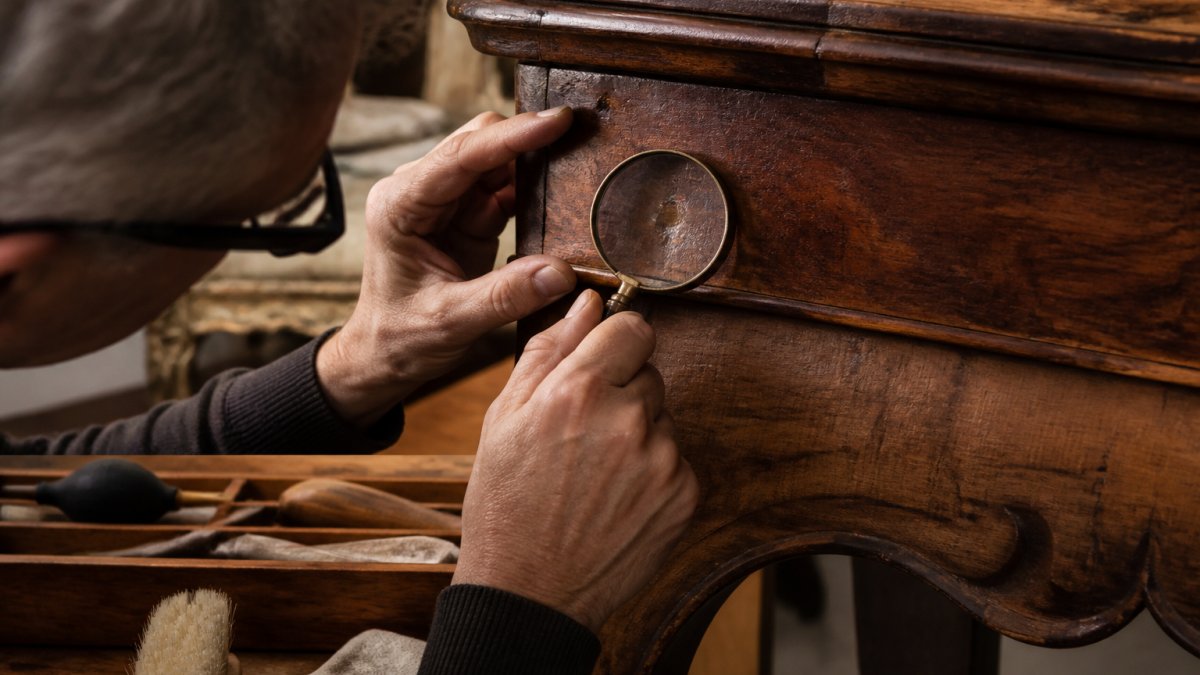
Start by researching the style, period, and maker. A piece claiming to be 18th-century French rocaille should show design elements consistent with that era.
Ask the seller for specific dating information. How do they know it's from a particular decade? Did they test the wood? Examine construction? Consult a specialist? Vague answers like "it looks old" are not sufficient.
Identifying reproductions and spotting red flags
Reproductions are made to look old but were created recently. They're not necessarily fraud, some are sold as reproductions at lower prices. The problem is when they're sold as authentic antiques.
Look for signs of modern manufacturing. Machine-made nails, power-tool marks, modern fasteners, and uniform finish all suggest reproduction. Genuine antiques show hand-tool marks, inconsistent finishes, and period-appropriate hardware. Wear patterns should be natural and random, not artificially distressed.
Check proportions and materials. Authentic pieces from specific periods use materials available then. A piece claiming to be 1700s mahogany should actually be mahogany, not stained pine. Proportions should match documented examples from that era.
Red flags include:
- Prices far below market value for similar pieces
- Vague descriptions avoiding specific dating or maker information
- No explanation of provenance or sourcing
- Photos from only one angle
- Artificial aging or distressing that looks uniform
- Claims of authenticity without supporting documentation
Evaluating provenance and ownership history
Provenance is the documented history of ownership. Strong provenance increases value and confidence. Ask sellers what they know about previous owners. Did the piece come from an estate? A collection?
Request any documentation. Auction house catalogs, estate sale records, or previous sale receipts all support authenticity claims. Original bills of sale are valuable.
Gaps in provenance are normal for old pieces, but long, well-documented histories are ideal.
Be skeptical of stories. "Belonged to a royal family" or "discovered in an attic" are common narratives that cannot be verified. Focus on documented facts rather than romantic stories.
Questions to Ask When Buying Antiques Online
Before you commit, send detailed questions to the seller. Good sellers welcome questions and respond thoroughly. Evasive or brief answers are warning signs.
Requesting detailed descriptions and photographs
Ask for multiple photos from different angles, including close-ups of maker's marks, signatures, damage, and repairs. Request photos in natural light and artificial light.
Ask about dimensions. Get height, width, depth, and weight. Ask about materials, is it solid wood or veneer? What type of wood? Is upholstery original or replaced?
Request photos of the underside, back, and any hidden areas. Antique furniture often shows its age most clearly underneath. Ask about any repairs, replacements, or restoration work.
Ask about condition specifically. Does it function? Are there loose joints, cracks, stains, or odors? Honest sellers describe flaws clearly.
Understanding condition, damage, and restoration work
Condition affects value significantly. A piece in pristine condition costs more than one needing restoration. Understand what you're buying.
Ask if the piece has been restored, refinished, or repaired. Original finishes are preferable to refinished pieces, but refinishing is common and acceptable if disclosed.
Ask about structural integrity. Can drawers open smoothly? Do doors close properly? Are legs stable? These functional questions matter for furniture you'll actually use.
Inquire about active issues. Is wood dry-rotting? Are there woodworm or pest damage? These problems are serious and expensive to fix. Ask how the seller would address them if you purchased.
Your Antique Buying Checklist: What to Verify Before Purchase
Use this checklist before committing to any online antique purchase:
| Step | What to Check | Why It Matters |
|---|---|---|
| Seller Research | Ratings, credentials, tenure, location | Identifies trustworthy dealers |
| Authenticity Review | Style details, materials, construction, provenance | Prevents buying reproductions |
| Condition Assessment | Photos, damage disclosure, restoration history | Ensures you know what you're getting |
| Communication | Seller responsiveness, detailed answers | Indicates professionalism and reliability |
| Documentation | Certificates, auction records, ownership history | Supports authenticity claims |
| Return Policy | Stated policy, dispute resolution process | Protects you if item doesn't match description |
| Payment Method | Buyer protection options available | Ensures recourse if transaction fails |
| Shipping Details | Method, insurance, packing approach | Protects against damage in transit |
Before you click purchase, verify at least 6 of these 8 items. Missing more than two suggests insufficient information to buy safely.
Payment Safety and Dispute Resolution for Online Antique Purchases
How you pay determines your protection if something goes wrong. Credit cards and PayPal offer buyer protection.
Use credit cards when possible. They offer chargeback protection if the item arrives damaged, misrepresented, or not at all (What To Do if You’re Billed for Things You Never Got, or You Get Unordered Products).
Avoid wire transfers and off-platform payments. These methods have no dispute resolution. Once you send money, it's gone.
If a seller insists on wire transfer or payment outside the platform, that's a major red flag. Legitimate dealers accept standard payment methods.
Understand the platform's dispute process. How long do you have to report a problem? What documentation do you need? What's the maximum refund?
Take photos when your package arrives. Document the condition immediately. If damage occurred in shipping, photos prove it.
Online Antique Shipping and Returns: Protection and Recourse
Shipping antiques safely is complex. Fragile pieces need specialist packing. Heavy furniture requires proper handling. Understand shipping before you buy.
Safe delivery, specialist packing, and transit insurance
Ask how the seller will pack the item. Standard cardboard boxes are insufficient for antiques. Proper packing uses bubble wrap, foam, and sturdy boxes with internal bracing. Fragile items need museum-quality packing.
Ask if the seller includes transit insurance. This covers damage during shipping. Without insurance, you bear the loss if the item arrives broken. Insurance costs a few percent of the item's value but protects your investment.
Understand shipping timelines. International shipments take weeks. Domestic shipments take days to two weeks. Factor this into your planning.
For high-value items, request signature confirmation. This ensures someone receives the package and documents its condition upon arrival.
Delivery inspection and damage claims
Inspect the package before signing for it. If the box is visibly damaged, note this on the delivery receipt. Open the package immediately and photograph the item and packing materials.
If damage occurred, contact the seller and shipper within 24 hours. Provide photos. Most shippers have damage claim processes. You'll need photos and the original shipping label.
Document everything. Keep packing materials, boxes, and photos. These support your claim if you need to dispute the transaction.
Understand return policies before buying. Some sellers accept returns for any reason within 30 days. Others only accept returns for misrepresentation. A few accept no returns.
Import Duties, Export Restrictions, and Cross-Border Purchases
Buying antiques from international sellers adds complexity.
Research import duties before buying from international sellers. These are taxes you pay when the item enters the country.
Some antique categories face export restrictions.
Ask the seller if they handle export documentation. Legitimate international dealers manage this.
Understand customs clearance. The shipper or you may need to complete customs forms. This adds time and sometimes fees.
For expensive pieces, consider hiring a customs broker. They handle documentation and clearance, ensuring smooth import and compliance with regulations.
Buying antiques online safely is achievable when you verify sellers, confirm authenticity, assess condition honestly, and understand your protections.
Frequently Asked Questions
What's the best way to verify if an antique is authentic before buying online?
Request high-resolution photographs from multiple angles, ask the seller about maker's marks and patina, and inquire about provenance documentation. Cross-reference the piece with museum collections or published references for that period and maker. For high-value items, ask if the seller will provide a condition report or authentication certificate. Authentic antiques show consistent wear patterns, period-appropriate materials, and documented ownership history, reproductions often lack these markers.
What questions should I ask an antique seller before purchasing?
Ask about age and origin, any repairs or restoration work, condition issues, return policy, and shipping method. Request documentation of provenance if available. For furniture, ask about wood type and structural integrity. Inquire whether the seller offers buyer protection through the platform or escrow services. Ask about their expertise and how long they've been selling antiques. A reputable seller welcomes detailed questions and provides thorough, honest answers.
How do I protect myself from payment scams when buying antiques online?
Use secure payment methods with buyer protection, such as credit cards or platform-managed escrow services that hold funds until delivery and inspection. Avoid wire transfers or off-platform payments unless the seller has extensive verified credentials. Check that the website uses HTTPS encryption. For high-value purchases, consider using a third-party authentication service or requesting payment in installments. Report suspicious sellers immediately to the platform.
What should I do if an antique arrives damaged or doesn't match the online description?
Document damage with photographs immediately upon delivery before opening or handling further. Contact the seller within the stated return window with photos and a detailed explanation. If the seller refuses a refund or exchange, file a dispute through your payment platform or contact your credit card company. Reputable sellers carry transit insurance and accept returns for significant discrepancies. Keep all shipping documentation and packaging as evidence for dispute resolution.