


Are Antique Objects Good for Decorating a Bookshelf?
Quick Summary
Yes, antique objects work very well to decorate bookshelf space, because their age, patina and texture give the shelf character that new decor rarely matches. Anchor the shelf with one centered piece, then add smaller objects and books for balance and height variation.
- Choose a central piece about one-third the height of the shelf section.
- Use stacked books as risers, placing a felt or cork pad between the books and the object.
- Check each shelf's weight rating before placing heavy bronze pieces.
- Keep fragile porcelain away from shelf edges and direct sunlight.
- Use three to five objects on an average shelf to avoid clutter.
Table of Contents
- Why Antique Objects Work So Well on a Bookshelf
- 1. Anchor the Shelf With a Centered Antique Piece
- 2. Use Books as Risers for Smaller Antiques
- 3. Balance Vertical Books With Horizontal Stacks and Objects
- 4. Pair Framed Antique Prints With Shelf Decor
- 5. Layer Brass, Bronze and Candlestick Pieces at Different Heights
- 6. Style a Shelf Without Books Using Sculptural Antiques
- 7. Scale Your Antique Display to a Small or Compact Bookcase
- Sourcing and Caring for Antique Objects
- Frequently Asked Questions
Why Antique Objects Work So Well on a Bookshelf
Last Updated: November 13, 2026
Antique objects bring something a bookshelf full of new decor cannot: history, patina and visual weight. When you want to decorate bookshelf space with antique objects, the pieces themselves do much of the work, because their age gives them character that reads from across a room. A shelf that looks finished is usually one where the objects feel like they belong together.
The reason is mostly scale and texture. Brass, bronze, gilt porcelain and aged wood have a depth that mass-produced accessories rarely match. A single well-chosen piece can anchor an entire shelf, while smaller items fill the gaps without competing for attention.
That makes the shelf feel personal rather than staged, which is the goal most homeowners are chasing.
Below, we walk through seven practical ways to style your shelf with antique finds, along with guidance on balance, scale and safe display.
1. Anchor the Shelf With a Centered Antique Piece
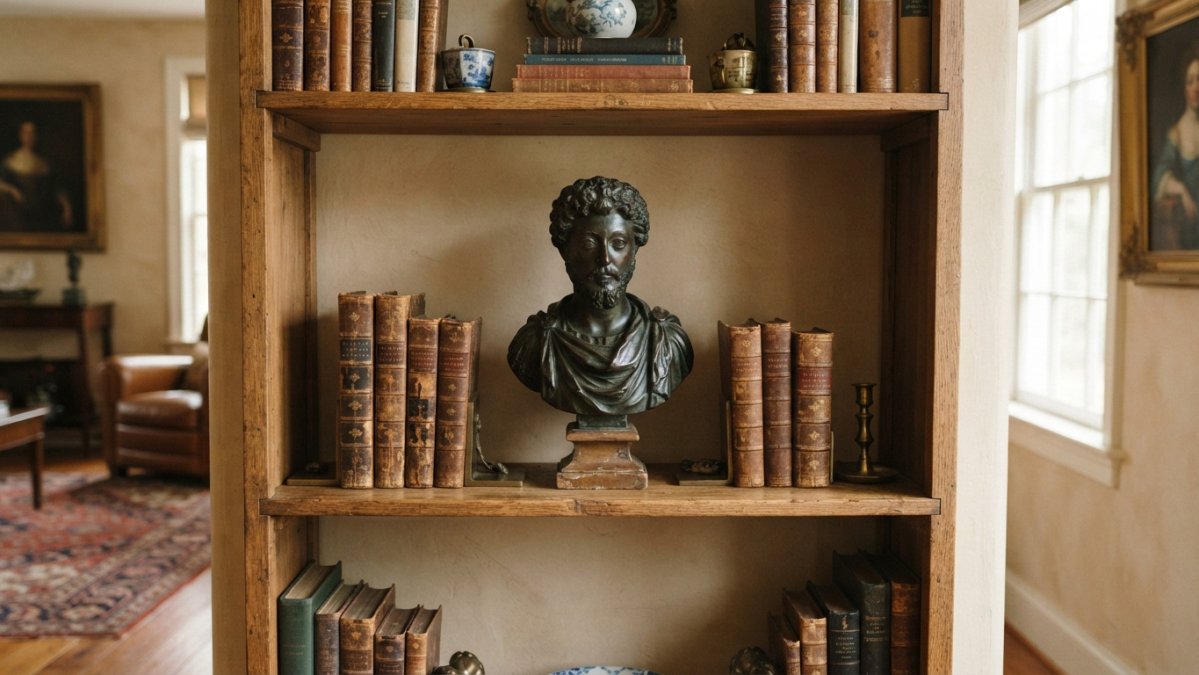
Start with one dominant object placed near the middle of the shelf. A bronze sculpture or a tall vessel works well because it gives the eye a clear place to land. Everything else on the shelf then radiates outward from that point.
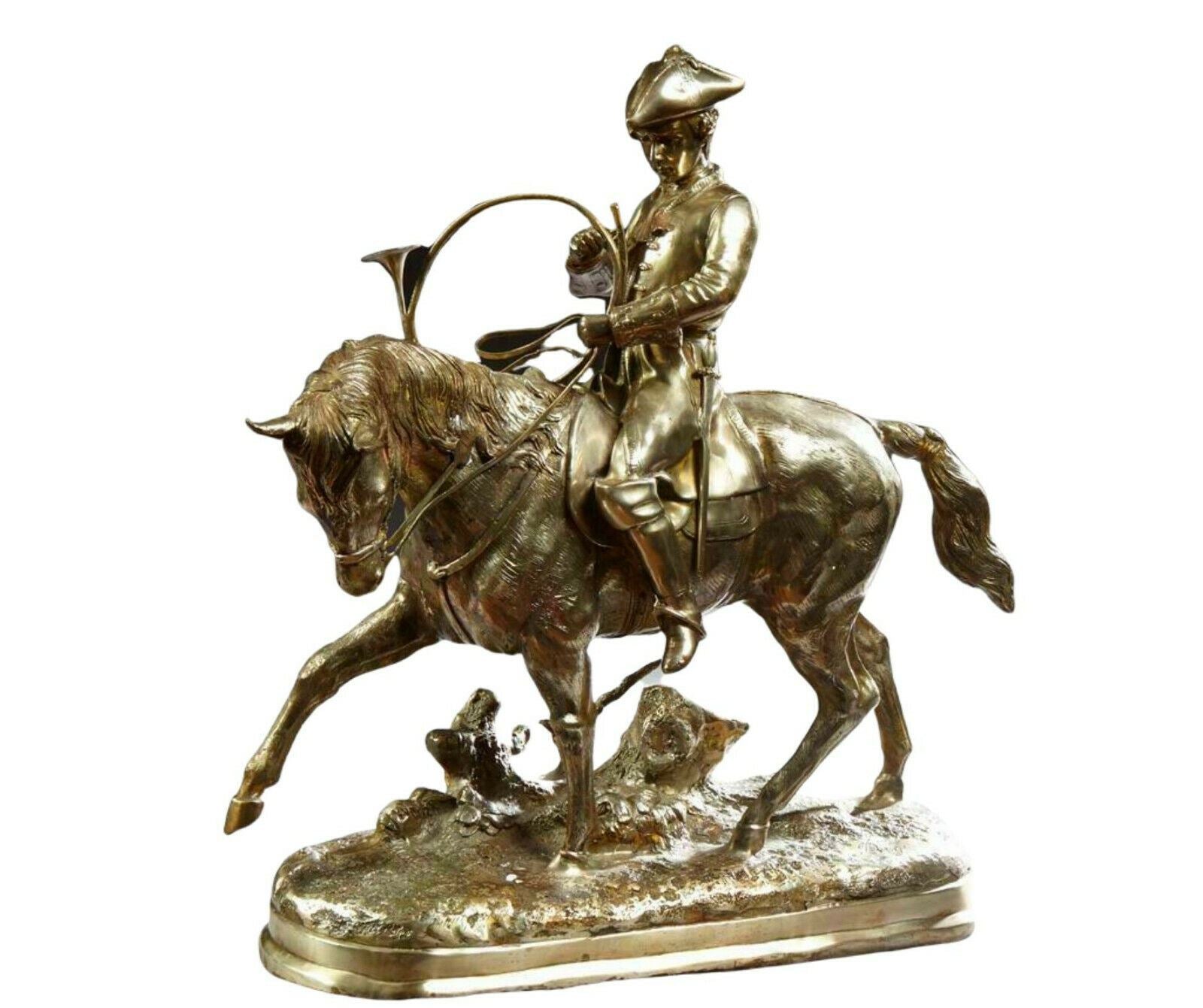
Choose a piece roughly one-third the height of the shelf section. Browse our bronze sculpture after Antoine Louis Barye, The Leader Of The Hunt to see a sculptural centerpiece sized for this position. A piece that is too small looks lost, while one that is too large crowds the books beside it. Our product listing for a bronze sculpture after Antoine Louis Barye shows the kind of bold, sculptural centerpiece that works well in this position.
Watch out: heavy bronze can stress thin shelf boards over time, so check the shelf's weight rating before placing a large piece on a floating shelf.
2. Use Books as Risers for Smaller Antiques
Stacked books make excellent risers when you decorate bookshelf displays. Place a few closed volumes on the shelf, then set a small antique object on top to lift it into view. This creates height variation without buying extra stands, and it is one of the few styling moves that costs nothing if you already own the books.
Antique leather-bound books are ideal for this purpose because their rich colors and textured spines add visual interest on their own. Thicker volumes work best as the base of a stack, with thinner ones on top.
Before you load a stack, check the books themselves. Antique books with loose hinges, detached boards, or brittle paper should not bear weight. A stack of two or three volumes distributes load better than a single thick book, and a felt or cork pad between the top book and a metal or ceramic object prevents scratches on both surfaces. Keep the total stack height under about one-third of the shelf opening so the object on top still reads as the focal point rather than the books.
Watch out: leather bindings can transfer oil or dye to light-colored shelf surfaces, so place a thin barrier under the bottom book on painted or unfinished wood.
3. Balance Vertical Books With Horizontal Stacks and Objects
Most bookshelves combine upright books with stacks lying flat. Mixing the two keeps the shelf from looking rigid. Place a horizontal stack on one side and a row of upright books on the other, then add an object in the space where the two meet.
Negative space matters here. Leave a few inches of open shelf between groupings so the arrangement breathes. A cluttered shelf reads as chaotic, even when every object is beautiful.
4. Pair Framed Antique Prints With Shelf Decor
Many homeowners overlook framed prints when styling a shelf, but an antique map or engraving leaned against the back wall adds depth. A framed piece also introduces a flat plane that contrasts with the three-dimensional objects in front of it.
An antique map of North and South America, circa 1840, shows how a framed print can sit beside sculptural pieces and tie the whole display together. Keep the frame's color palette in mind so it complements your metals and woods.
5. Layer Brass, Bronze and Candlestick Pieces at Different Heights
Metals look best when they are layered. Place a taller candlestick at the back, a mid-height bronze piece in front and a low brass dish at the edge. The overlapping heights create a sense of depth that a single row never achieves.
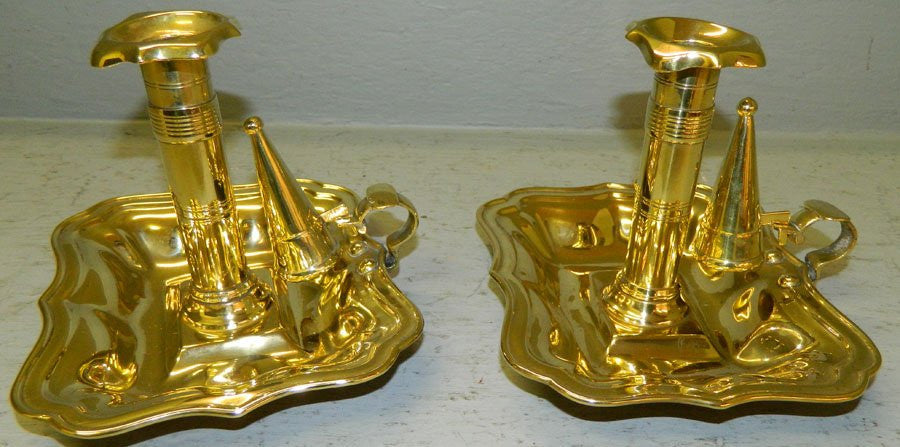
Matching pairs are useful here. A pair of candlesticks on either side of a central object creates symmetry, while a mismatched set adds a more relaxed, collected feel. Our pair of brass candlesticks fits this layered approach well, and a brass chambersticks set offers a compact option for a smaller shelf.
Best for: shelves that already hold a central piece and need warmth. Skip if: your shelf is glass-fronted and metals will tarnish quickly.
6. Style a Shelf Without Books Using Sculptural Antiques
Not every antique display needs books. A shelf filled only with sculptural pieces can feel modern and gallery-like. Group three or four objects of different heights and materials, then leave generous space around them.
This approach works especially well for antique ceramics, globes and small figurative sculptures. Choose a consistent color palette so the group reads as intentional. Without books to provide structure, the balance of the arrangement carries more weight, so take time to step back and adjust.
7. Scale Your Antique Display to a Small or Compact Bookcase
A compact bookcase calls for restraint. Choose one or two antique objects rather than five. A small antique bookcase can itself become part of the display, so keep the decor simple enough to let the furniture speak.
If your shelf is shallow, prioritize low, flat objects that will not tip forward. Tall pieces belong on deeper shelves or at the top of a tall unit. For larger pieces of furniture, the antique French bookcase in our collection shows how a substantial case can hold a full display without feeling crowded.
Compact shelves raise two practical concerns that general styling guides skip: load and stability. A floating shelf or a thin adjustable shelf board has a lower weight rating than a case piece with a fixed bottom shelf, so put the heaviest bronze or stone piece on the bottom shelf or on the cabinet base, not on an upper adjustable board. A small antique object with a narrow base, such as a candlestick or a figurine, is more stable on a shelf with a raised lip or a shallow tray than on a bare board where a bump can send it over the edge.
Fragile pieces on a compact shelf also sit closer to traffic. Keep porcelain and glass away from the shelf edge and out of the path of doors, chair backs, and vacuum cords. If the bookcase is glass-fronted, check that the interior depth leaves clearance for the tallest piece so the door does not contact it when closed.
Good scale is the difference between a shelf that looks curated and one that looks cramped. When in doubt, remove one object and see whether the arrangement improves.
Sourcing and Caring for Antique Objects
Before you buy, examine each piece for wear, repairs and provenance. Look for crazing on porcelain, verdigris on bronze and loose joints on wooden furniture. Ask the seller about any documentation before you buy.
Display considerations matter too. Keep delicate porcelain away from direct sunlight, which can fade gilding and dry out wood over time. Heavy bronze should sit on a secure shelf, and fragile pieces are better placed where they cannot be knocked off by a passing hand.
Budget carefully. Antique prices vary widely by age, maker and condition, so it helps to decide on a total budget before you start shopping and to buy one meaningful piece at a time rather than many small ones.
Before buying or placing pieces, check condition, provenance and display conditions:
| Concern | What to check | Why it matters |
|---|---|---|
| Porcelain | Crazing | Signals wear or damage |
| Bronze | Verdigris | Indicates surface age and corrosion |
| Wooden furniture | Loose joints | Affects stability and safe display |
| Display light | Direct sunlight | Can fade gilding and dry out wood |
| Heavy pieces | Secure shelf | Prevents damage from falls |
| Budget | Total set before shopping | Antique prices vary widely by age and condition |
Ready to start styling? Old Europe Antique Home Furnishings in Austin, Texas, offers a curated selection of European antiques with pieces dating back to the 16th century. Visit our showroom by appointment or browse online to find the centerpiece for your shelf.
Frequently Asked Questions
How do you decorate a bookshelf with antique objects?
Start with one anchor piece, such as a bronze bust or a pair of gilt candlesticks, and place it near the middle of the shelf. Build around it with antique books stacked horizontally and smaller objects at varying heights. Keep one shelf mostly open so the eye can rest. Work in odd numbers within each grouping and vary the heights so the arrangement feels balanced rather than crowded. Step back from the room every few minutes to check the overall effect before adding more pieces.
How do you mix books and antiques on a bookshelf?
Alternate upright books with horizontal stacks, then place antiques on top of the stacks or between them. Antique books with worn leather spines work well because their color and texture echo older objects. Use the top of a stack as a riser for a small piece such as a porcelain vase or a brass clock. Keep the book spines in a consistent color range so the antiques stand out as the focal points rather than competing with them.
What antique objects look good on bookshelves?
Objects with strong silhouettes and a limited palette tend to look best. Examples include an antique bronze bust, a pair of gilt candelabra, an English porcelain covered vase, a framed antique map, or a decorative silver plate box. Globes and compotes also work well as sculptural accents. Choose two or three pieces that share a material or finish, such as gold or brass, so the shelf reads as intentional rather than random.
How do you decorate a bookshelf without books?
Treat each shelf as a small vignette. Place a larger antique object, such as a bronze bust or a gilt book stand, on the lower shelf, and set a smaller piece like a porcelain vase or a silver box on the shelf above. Use a framed antique map or an antique plaque on the back panel for depth. Leave open space around each grouping so the pieces breathe, and avoid filling every inch of the shelf.
