


Curated Antique European Statement Pieces: 10 Timeless Finds
Table of Contents
- What Makes a Curated Antique European Statement Piece
-
10 Curated Antique European Statement Pieces That Transform Interiors
- Palacial European Walnut Mantle with Verde Marble Inset
- Monumental French Renaissance Revival Armoire
- French Renaissance Revival Carved Walnut Sideboard
- French Louis XV Style Vitrine with Ormulu Accents
- Patinated Bronze Bacchanale Statue After Clodion
- European Gilt Bronze Compotes on Marble Plinths
- Pair of 19th-Century French Scholar Portraits
- Spanish Vargueno Desk with Brass Grill and Console Table
- Large Italian Porcelain Ewer with Figural Detail
- Continental Majolica Figural Spill Vases
- Authentic European Antiques: Provenance and Condition
- Antique European Cabinet Prices and Value by Object Type
- How to Style Antiques in a Modern Home
- Sourcing, Shipping, and International Considerations
- Frequently Asked Questions
Last Updated: October 18, 2026
What Makes a Curated Antique European Statement Piece
A curated antique European statement piece is more than furniture or decor, it's a focal point that anchors a room's entire aesthetic.
These pieces combine monumental proportions, distinctive regional style, and undeniable patina. A French Renaissance Revival armoire standing 96 inches tall isn't just storage, it becomes architecture.

Sourcing these pieces requires patience and expertise. According to TEFAF's 2026 Art Market Report, authentic European antiques with verifiable provenance command 40% higher collector interest than pieces with unclear origins.
The best statement pieces solve a design problem while adding value, filling empty walls, anchoring sparse rooms, and creating instant sophistication.
10 Curated Antique European Statement Pieces That Transform Interiors
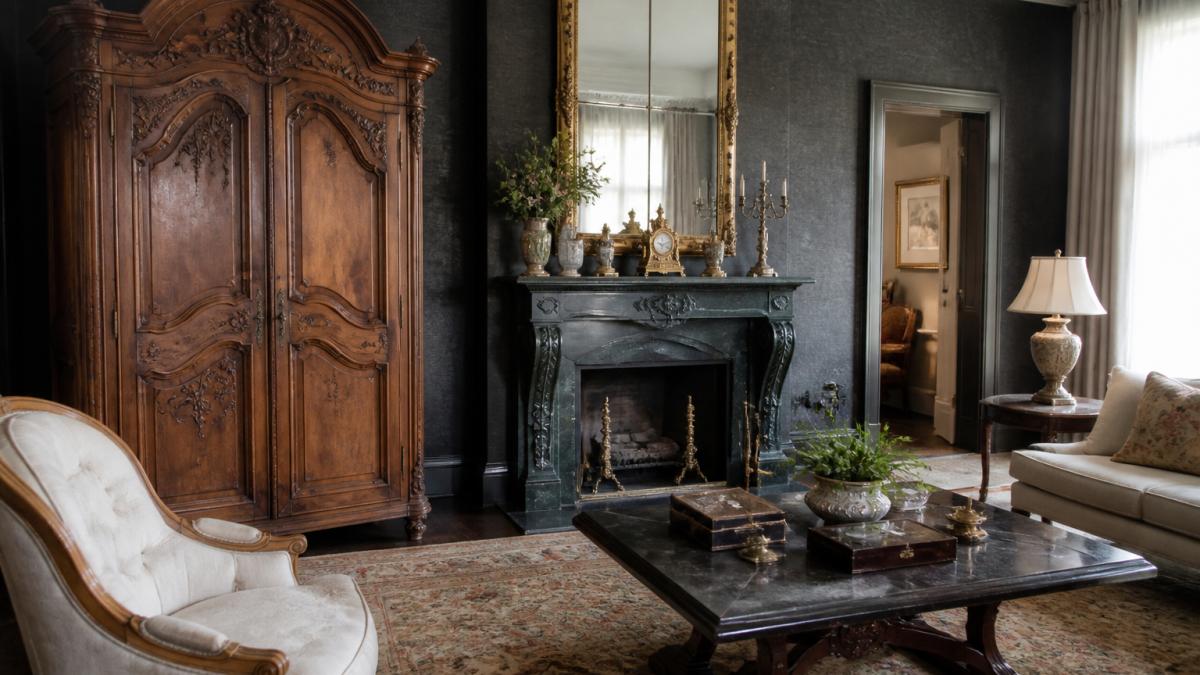
Palacial European Walnut Mantle with Verde Marble Inset
Standing 80 inches high and 75 inches wide, the Palacial European Walnut Mantle dominates any fireplace it inhabits. Carved flutes, treated pillars, and an inset of rich verde marble add unexpected color and luxury.
Each pillar is individually treated, the cornice displays rondel detailing, and the marble liner is fitted with precision that speaks to bespoke cabinetmaking. The light green and brown palette bridges historical elegance with modern neutrals.
Monumental French Renaissance Revival Armoire
French Renaissance Revival represents one of the most theatrical periods in European furniture design. This armoire, standing approximately 96 inches tall, exemplifies the movement's revival of 16th-century grandeur.
Dating to circa 1860-1890, this piece demonstrates hand-cut dovetail joinery and aged hardware consistent with authentic 19th century construction. The parcel-gilt decoration catches light and adds dimension, and interior examination reveals thick secondary boards and construction methods impossible to replicate at scale today.
At $3,399.15, this Monumental French Renaissance Revival Armoire represents significant value for a piece of this architectural scale and historical authenticity.
French Renaissance Revival Carved Walnut Sideboard
This sideboard measures 100.75 inches in height, 70.75 inches in width, and 23.5 inches in depth, a substantial presence that anchors dining rooms and formal spaces.
The sideboard functions as both storage and display. Three drawers and three additional cabinet doors provide ample space for linens, dishware, and collectibles, while fluted columns rise on paw feet. Hand-fitted joints, carved scrollwork, and period-appropriate hardware make this a museum-quality functional piece.
The French Renaissance Revival Carved Walnut Sideboard is priced at $11,522.25, reflecting both its size and the labor-intensive carving that defines it.
French Louis XV Style Vitrine with Ormulu Accents
This French Louis XV style vitrine, standing 63.75 inches tall, makes collections visible with exceptional elegance.
Constructed in the late 19th century, this vitrine features cabriole legs ending in sabots, a detail that signals authentic period design.
At 34.5 inches wide and 18 inches deep, it occupies less floor space than its visual impact suggests. Positioned in a living room corner or dining room alcove, it becomes a focal point without overwhelming the space.
Patinated Bronze Bacchanale Statue After Clodion
Standing 18 inches tall on a molded marble plinth, this patinated bronze depicts a bacchanale with the intricate detail and dynamic pose characteristic of Clodion's original work.
Each curve and fold of the drapery is rendered with precision, and the marble plinth grounds the piece. Signed and numbered, this statue functions as both collectible and conversation starter, working equally well in a library, on a mantelpiece, or as a gallery-style accent in a living room.
The Patinated Bronze Bacchanale Statue is priced at $2,854.30.
European Gilt Bronze Compotes on Marble Plinths
Paired objects create visual rhythm and formality. These European gilt bronze and marble mounted compotes, dating to circa 1830, stand 10.5 inches tall, each featuring neoclassical scenes of satyrs with twin-head dolphin form handles.
Mounted on cylindrical green marble plinths, these compotes function as mantelpiece accents, console table centerpieces, or bookshelf bookends.
What makes these pieces valuable is the pairing: single compotes appear decorative, while paired compotes suggest intentional curation. At Old Europe Antique Home Furnishings, this pair is priced at $1,100.00.
Pair of 19th-Century French Scholar Portraits
These oil on canvas paintings by Theodore du Bois (French, 1804-1879) capture two distinguished scholars with remarkable realism. Measuring 28 by 22.5 inches each and framed in uniform painted frames, they demonstrate the technical skill and psychological insight of 19th-century portraiture, each signed at the lower right.
Hung as a pair in a library, study, or formal living room, these scholar portraits add intellectual gravitas and period authenticity, with uniform frames creating cohesion while each subject's individual character prevents monotony.
The Pair of 19th-Century French Scholar Portraits is priced at $1,523.00.
Spanish Vargueno Desk with Brass Grill and Console Table
This lot includes two pieces: a Spanish vargueno (traveling desk) and a console table designed to support it.
Varguenos are functional sculptures, designed to travel yet substantial enough to command a room. The brass details, grill, figures, and claws over ball feet create visual richness.
What makes this a statement piece: the historical specificity. Spanish Renaissance and colonial-era furniture has distinct characteristics, the twist columns, the brass work, the proportions, that immediately signal educated, curated taste.
Antique Mantle, Palacial European Walnut w/ Verde Marble Inset, Gorgeous, 1800s! →
Large Italian Porcelain Ewer with Figural Detail
This late 19th-century Italian porcelain ewer stands 33 inches tall, a monumental decorative object that functions as sculpture.
Large ewers serve multiple purposes: decorative objects on mantels, console tables, or shelves, or vessels for dried flowers and branches. This piece's multi-color decor works with both warm and cool interior schemes, and the figural handle and narrative scene make it conversation-worthy without being garish.
The Large Italian Porcelain Ewer is priced at $841.52.
Continental Majolica Figural Spill Vases
Majolica, earthenware with colorful glazes and applied relief decoration, represents a distinct aesthetic. This pair of Continental majolica spill vases, dating to the late 19th century, models courting couples seated under trees.
Paired figural vases create visual interest through their narrative content. Glazed majolica surfaces catch light differently than bronze or marble, creating visual variety in a curated collection. These pieces work well on bookshelves, console tables, or mantels where their narrative detail can be appreciated up close.
The Pair of Continental Majolica Figural Spill Vases is priced at $945.00.
Authentic European Antiques: Provenance and Condition
Authenticity separates genuine antiques from reproductions. Provenance, the documented history of ownership and origin, provides the foundation for confidence in a purchase.
Condition matters more than perfection. Genuine antiques display wear commensurate with age and use. Surface patina, minor veneer chips, and finish variation are not defects, they're evidence of authenticity.
Red flags for reproductions include uniform finish without variation, machine-cut joinery, modern hardware, and suspiciously perfect condition.
Antique European Cabinet Prices and Value by Object Type
Pricing antique European statement pieces depends on size, rarity, condition, provenance, and material composition. Large-scale furniture commands higher prices than smaller decorative objects; a monumental armoire or sideboard represents significant woodworking labor and occupies substantial space, justifying premium pricing.
| Object Type | Typical Price Range | Value Drivers | Best For |
|---|---|---|---|
| Large Furniture (armoires, sideboards) | $3,000-$15,000+ | Scale, carving detail, material, construction quality | Formal rooms, collectors seeking architectural pieces |
| Display Cabinets (vitrines) | $2,000-$5,000 | Glass quality, ormolu work, interior condition | Collectors, gallery-style display |
| Mantels & Architectural | $8,000-$20,000+ | Marble insets, carved detail, installation complexity | Fireplace focal points, period homes |
| Sculptural Objects (bronze, marble) | $1,500-$4,000 | Artist attribution, patina, plinth quality | Mantels, console tables, galleries |
| Decorative Ceramics & Ewers | $500-$2,500 | Figural detail, glaze quality, narrative content | Shelves, console tables, collections |
| Paired Objects | +30-50% premium | Matching sets command higher value than singles | Formal arrangements, symmetrical displays |
Old Europe Antique Home Furnishings prices pieces based on authenticity, condition, and market demand.
How to Style Antiques in a Modern Home
The common mistake is treating antiques as museum pieces, isolating them behind velvet ropes and never using them. A French Renaissance Revival sideboard displays dinnerware and serves as a buffet table.

Mix antiques with contemporary elements. A carved walnut sideboard works beautifully against white walls with modern lighting.
Scale matters. A 96-inch armoire requires ceiling height and wall space, so position it as the room's focal point rather than cramming it into a corner.
Lighting transforms antiques. Carved details, gilt accents, and patinated surfaces come alive under appropriate illumination. Direct spotlighting highlights sculptural elements.
Color coordination requires restraint. Let the antique establish the palette. If a sideboard features dark walnut and carved details, build the room around warm neutrals and jewel tones. If a vitrine displays delicate porcelain, keep surrounding walls calm so the display remains the focal point.
Sourcing, Shipping, and International Considerations
Finding curated antique European statement pieces requires patience and expertise. Antique fairs, estate sales, and reputable dealers offer better odds than online marketplaces where authentication becomes difficult.
International purchases involve import duties and customs considerations. According to U.S. Customs and Border Protection guidelines on antique imports, pieces over 100 years old may qualify for duty-free entry under certain conditions.
Insurance matters. High-value antiques should be insured for replacement value, not purchase price. Condition reports documenting pre-shipment state protect against damage claims.
Return policies vary by dealer. Old Europe Antique Home Furnishings operates with transparency about condition, noting imperfections and wear in listings.
Curated antique European statement pieces represent more than furniture or decoration. At Old Europe Antique Home Furnishings, we specialize in sourcing authentic European antiques dating back to the 16th century, providing collectors and designers with access to museum-quality pieces. SHOP NOW! and discover how a single statement piece transforms an entire interior.
Frequently Asked Questions
How can you tell if a European antique is authentic?
Authentic European antiques show signs of age consistent with their period: hand-cut joinery, period-appropriate hardware, natural patina, and wear commensurate with use. Examine construction methods, 19th-century pieces feature dovetail joints and thick secondary boards. Research the maker's marks, signatures, or regional style characteristics. Request documentation of provenance when available. Reputable dealers like Old Europe Antique Home Furnishings provide detailed condition reports and construction analysis to verify authenticity.
What should you check before buying an antique European cabinet?
Inspect structural integrity: check for loose joints, warping, or veneer damage. Verify all drawers and doors operate smoothly. Examine the interior for hand-cut dovetails and aged wood consistent with the claimed period. Request high-resolution photos of any restoration or repairs. Ask about dimensions and weight to confirm fit and delivery feasibility. Confirm the asking price aligns with comparable pieces of similar era, origin, and condition. Always ask about the dealer's return policy and authentication guarantees.
How much do antique European cabinets typically cost?
Prices vary dramatically by period, origin, craftsmanship, and condition. A French Louis XV vitrine is priced at $2,762; a monumental French Renaissance Revival armoire costs $3,399.15; a carved walnut sideboard is priced at $11,522.25. A Palacial European Walnut Mantle with Verde Marble Inset is priced at $12,959.53. Smaller decorative objects, bronze compotes, ewers, or vases, range from $841.52 to $2,854.30. Prices reflect authenticity, provenance documentation, and historical significance rather than age alone.
How do you style antique furniture in a modern home?
Place one large statement piece, an armoire, sideboard, or mantle, as the room anchor; build the scheme around its color and era. Mix antique furniture with contemporary pieces to prevent a museum feel; pair a carved Renaissance sideboard with modern lighting and neutral walls. Use antique decorative objects as focal points on shelves or mantels. Maintain visual balance by spacing large pieces and avoiding clustering. Consider the piece's regional style and let its historical character guide your palette. Lighting is crucial: highlight craftsmanship with focused fixtures that emphasize carved details and patina.
What counts as an antique statement piece?
A statement piece commands visual presence through scale, craftsmanship, or historical significance. Large-scale furniture, armoires, sideboards, or mantles, anchor rooms architecturally. Pieces with exceptional carving, rare materials (marble, gilt bronze, porcelain), or documented provenance make strong statements. Regional or era-defining styles, French Renaissance Revival, Spanish Baroque, Italian neoclassical, carry cultural weight. Condition matters: authentic patina and wear enhance character. A true statement piece draws the eye first, sets the room's tone, and reflects the collector's discernment rather than filling functional need alone.